Cabin Air Filter Guide 2026: Carbon vs HEPA, by Fitment
Carbon or HEPA-style cabin air filter in 2026? We compare media types, airflow trade-offs and how to match the right part number to your exact year and model.
Reader-supported: we may earn a commission from links on this page, at no extra cost to you. It never affects our picks. Learn more.
Your cabin air filter is the cheapest part on your car that you can actually feel working. When it's fresh, the vents blow harder, the windows defog faster, and the interior smells like nothing at all. When it's packed with three years of leaf litter and brake dust, your blower motor works overtime and your allergies get worse every commute.
The confusing part in 2026 isn't whether to change it — it's which one. The same physical filter slot might be offered as a plain particulate filter, an activated-carbon filter, a "HEPA-grade" filter, and an antimicrobial/biofunctional filter, at three different price tiers. And every one of those is sold under a dozen brand names with different part numbers.
This guide sorts out the media types, explains where the upcharge is worth it, and — most importantly — shows you how to confirm the part actually fits your exact year, make, model, and trim before you click buy.
The short version
- Best overall: FRAM Fresh Breeze CF10285
- Best filtration: Bosch HEPA Cabin Air Filter 6091C
- Best OE-grade pick: MANN-FILTER FreciousPlus
- Budget pick: Puroma CF10285 2-Pack
- Best for Toyota and Honda owners: Denso 453-6047 Particulate Cabin Air Filter
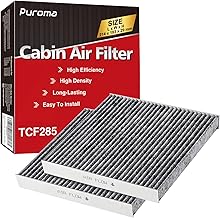 Budget pick · Puroma CF10285 2-Pack — Check price on Amazon →
 Best OE-grade pick · MANN-FILTER FreciousPlus — Check price on Amazon →
 Best filtration · Bosch HEPA Cabin Air Filter 6091C — Check price on Amazon →
 Best overall · FRAM Fresh Breeze CF10285 — Check price on Amazon →
Fitment first: this is a vehicle-specific part
There is no universal cabin air filter. The media can be cut to size in some cases, but the frame dimensions, pleat depth, and airflow-direction arrow are all model-specific. A filter that's 3 mm too tall won't seat in the housing door; one that's too short lets unfiltered air bypass around the edges, which defeats the whole exercise.
Three reliable ways to confirm fitment before buying:
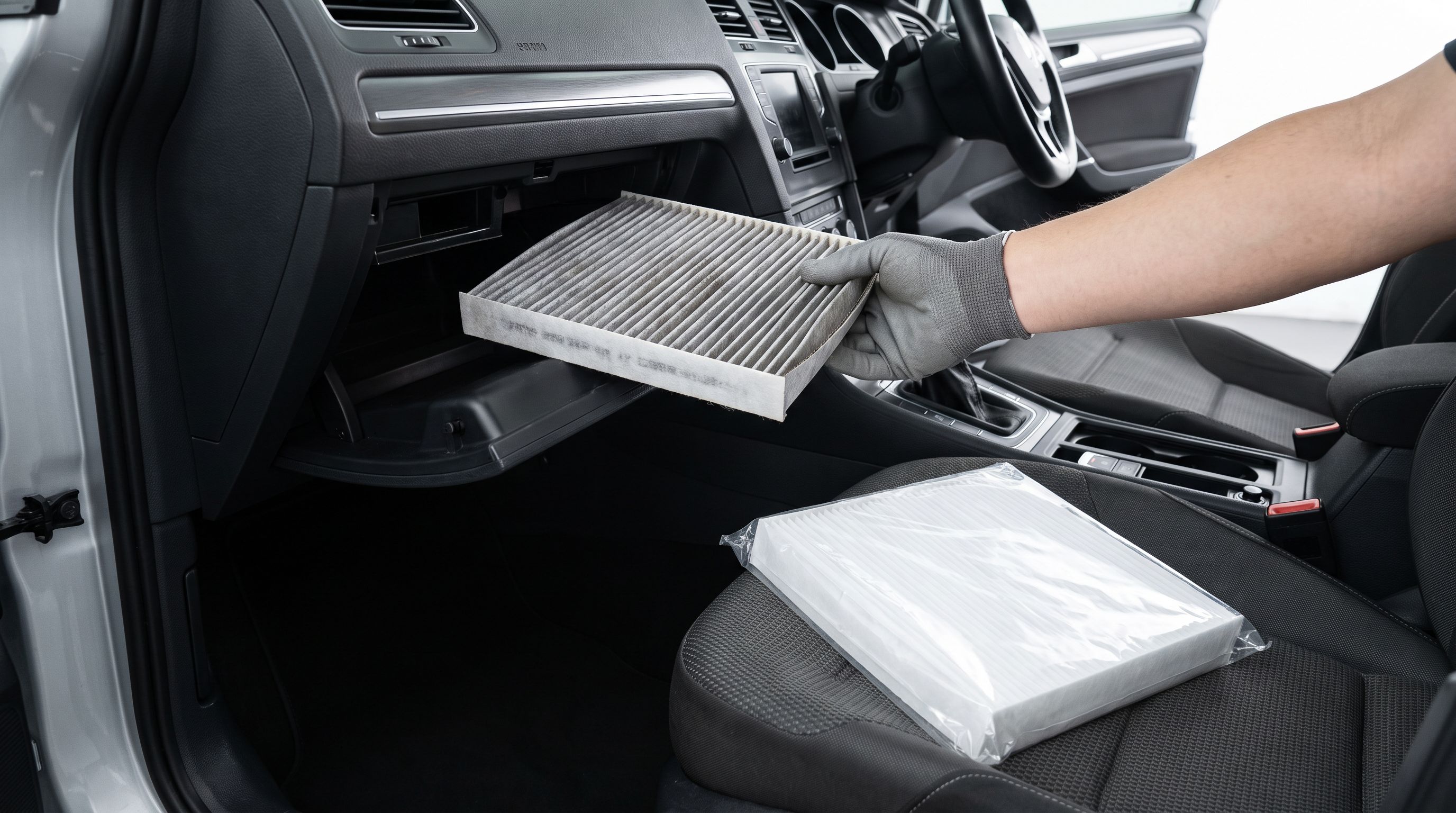
- Pull the old one and measure it. This is the gold standard. Most cabin filters live behind the glovebox and come out in under five minutes with no tools. Write down length × width × thickness in millimetres and note the airflow arrow direction.
- Use the manufacturer's vehicle lookup. FRAM, Bosch, MANN-FILTER, and Denso all publish year/make/model/engine catalogs. Cross-reference at least two before committing.
- Check your owner's manual or the OE part number. Searching the OEM number (e.g., a Toyota 87139-xxxxx or VW 5Q0-819-xxx) usually surfaces the aftermarket cross-reference list instantly.
Two fitment gotchas worth knowing. First, some vehicles take two filters stacked in one housing — many Mazda, Subaru, and Mercedes applications do. Buying a single filter leaves half the slot empty. Second, mid-generation running changes happen. A 2022 and a 2026 of the same nameplate can use different filters if the HVAC box was revised. Match the model year, not just the nameplate.
Note that part numbers like CF10285 are application codes, not sizes — CF10285 covers a specific list of vehicles (a wide range of Ford, Mazda, and other applications). Always verify your vehicle is on that list rather than assuming the number is generic.
Carbon vs HEPA vs particulate: what you're actually buying
Particulate (standard)
A pleated synthetic or cellulose media that captures dust, pollen, road grit, and insects. This is what most cars ship with from the factory. It does the structural job — protecting the evaporator and blower motor — and handles visible debris well. It does nothing for odors or gases.
Activated carbon (charcoal)
Same particulate layer, plus a bonded layer of activated carbon. The carbon adsorbs gas-phase contaminants: diesel exhaust, sewage smells, farm odors, ozone, and volatile organic compounds. This is the single biggest quality-of-life upgrade if you sit in traffic, drive near industrial areas, or your car has developed a musty AC smell.
The catch: carbon capacity is finite. Once the carbon is saturated — typically well before the media is visually dirty — the odor control fades. Carbon filters reward shorter change intervals, which is exactly why multi-packs make sense.
HEPA-grade
HEPA is a defined standard (99.97% capture at 0.3 microns) borrowed from the indoor air world. In automotive use, "HEPA" is usually a marketing shorthand for very high efficiency media rather than a certified HEPA element in a certified sealed housing — your HVAC box isn't lab-sealed, so some bypass is inevitable. That said, high-efficiency media like the Bosch HEPA Cabin Air Filter 6091C genuinely captures a larger share of fine particulate (PM2.5, smoke, ultrafine allergens) than standard media.
The trade-off is airflow. Denser media raises pressure drop, which can mean slightly weaker vent output at a given fan speed and marginally more load on the blower motor. On most modern vehicles with healthy blowers this is unnoticeable; on older cars with a tired blower or a partially clogged evaporator, it's more apparent.
Biofunctional / antimicrobial
European OE suppliers add a coating intended to inhibit mold and bacterial growth on the media surface, addressing the classic "AC smells like a locker room" complaint. MANN-FILTER FreciousPlus is the best-known example. It's a real feature, not just marketing, but it won't fix an already-contaminated evaporator core — that needs a proper HVAC cleaning treatment.
Comparison table
| Pick | Media type | Best for | Main trade-off |
|---|---|---|---|
| FRAM Fresh Breeze CF10285 | Carbon + baking soda | Everyday drivers wanting odor control and broad availability | Carbon capacity fades before media looks dirty |
| Bosch HEPA 6091C | HEPA-grade high-efficiency | Allergy sufferers, wildfire smoke regions, urban PM2.5 | Higher pressure drop; narrower vehicle coverage |
| MANN-FILTER FreciousPlus | Particulate + carbon + biofunctional coating | European cars; musty-AC complaints | Premium pricing; check European-focused catalog |
| Puroma CF10285 2-Pack | Activated carbon | Cost-per-change and staying on schedule | Aftermarket-only; fit tolerances vary by application |
| Denso 453-6047 | Particulate | Toyota/Honda owners wanting OE-style airflow | No odor or gas filtration |
The picks
FRAM Fresh Breeze CF10285 — best overall
Prices last checked September 26, 2026. Amazon prices change frequently, so treat these as a guide and check the live price before you buy.
FRAM Fresh Breeze CF10285
Baking-soda-and-carbon media with wide vehicle coverage and consistent owner feedback on odor control.
FRAM's Fresh Breeze line pairs a particulate layer with activated carbon and baking soda, and it's the default recommendation for most drivers because the coverage is enormous and the catalog lookup is reliable. FRAM claims the Fresh Breeze media blocks up to 98% of road dust and pollen particles; owner feedback consistently flags improved odor control in the first few weeks after install. The CF10285 application covers a wide range of Ford and Mazda-family vehicles — verify yours on FRAM's lookup rather than assuming. What it gives up: it isn't a high-efficiency media, so if fine smoke particulate is your concern, step up to a HEPA-grade option.
Bosch HEPA Cabin Air Filter 6091C — best filtration
Bosch HEPA Cabin Air Filter 6091C
Bosch's HEPA-grade media targets fine particulate and allergens rather than just dust and pollen.
If you have seasonal allergies, live somewhere with wildfire smoke, or commute through dense city traffic, this is the media tier that matters. Bosch's HEPA line uses a denser, higher-efficiency element aimed at fine particulate rather than just visible dust, and Bosch is an OE supplier with credible engineering behind the claim. It's a sensible pick when your priority is what you're breathing, not just what the filter looks like at change time. Trade-offs: coverage is narrower than FRAM's catalog, the denser media raises pressure drop slightly, and it's not a carbon filter — gas-phase odors aren't its specialty.
MANN-FILTER FreciousPlus — best OE-grade pick
MANN-FILTER FreciousPlus
European OE supplier biofunctional media with carbon layer; strong fitment accuracy for VW, BMW, Mercedes.
MANN-FILTER supplies filters to European automakers, and the FreciousPlus line layers particulate media, activated carbon, and a biofunctional coating meant to inhibit mold and bacterial growth on the filter itself. For VW, Audi, BMW, Mercedes, and Volvo owners, this is often the closest thing to the factory part without paying dealer counter pricing, and the frame tolerances tend to be spot-on — a real advantage in European HVAC boxes that don't forgive sloppy dimensions. Give-ups: it sits at the premium end, coverage skews European, and the antimicrobial layer can't rescue an evaporator that's already growing something.
Puroma CF10285 2-Pack — budget pick
Puroma CF10285 2-Pack
Two activated-carbon filters per box, so you can change on schedule instead of stretching intervals.
The honest truth about cabin filters is that changing a mid-priced one every year beats stretching a premium one to three. Puroma ships two activated-carbon filters in a box, which makes that cadence painless and puts a spare in your glovebox for the next service. Reviews are broadly positive on fit and initial odor reduction for the applications it covers. It's an aftermarket brand without OE-supplier pedigree, so fit tolerances and media consistency vary more by application than with Bosch or MANN — measure your old filter before ordering, and confirm your vehicle appears on the CF10285 application list.
Denso 453-6047 Particulate Cabin Air Filter — best for Toyota and Honda owners

Denso 453-6047 Particulate Cabin Air Filter
OE-supplier particulate media with precise frame dimensions for common Japanese housings.
Denso is an OE supplier to much of the Japanese market, and its particulate filters are dimensionally precise for the housings they're designed around — no forcing the glovebox door closed, no gaps at the edges. If your car came with a plain particulate filter and you mainly want restored airflow, faster defog, and correct fitment, this is a clean like-for-like replacement with OE-style pressure drop. What it gives up is obvious: no carbon layer, so exhaust and musty odors pass straight through. Confirm the specific Denso part number against your year and model, as Denso publishes several closely related numbers.
How to choose
1. Start with your actual complaint
Weak vent airflow and slow defogging point to a clogged filter of any type — just change it. Persistent exhaust or manure smells in traffic call for carbon. Allergy or smoke sensitivity calls for HEPA-grade media. A musty smell on AC startup points to the evaporator, not the filter, and needs an HVAC cleaner alongside a new biofunctional filter.
2. Confirm count and orientation
Check whether your vehicle uses one filter or two, and always install with the airflow arrow pointing the direction the old filter pointed (usually downward toward the blower). Installing one backwards doesn't stop it working, but it reduces dust-holding capacity.
3. Weigh airflow against filtration
Older vehicles, high-mileage blower motors, and cars in very dusty environments do better with standard or carbon media. Newer cars with strong HVAC systems can absorb the extra pressure drop of HEPA-grade media without a noticeable drop in vent output.
4. Match brand to market
European cars are best served by European OE suppliers (MANN-FILTER, Corteco/micronAir, MAHLE). Japanese cars by Denso. Domestic and broad-market applications are where FRAM and Bosch catalogs are deepest. This isn't snobbery — it's where each brand's dimensional data is most accurate.
5. Plan the interval, not just the purchase
Most manufacturers specify 12,000–15,000 miles or annually; dusty, pollen-heavy, or heavy-traffic conditions justify more often. Carbon filters in particular lose odor performance before they look dirty. Buying a two-pack is a legitimate strategy.
Installation notes
On the large majority of vehicles the filter sits behind the glovebox: empty it, squeeze the sides to release the stops, drop the box down, and the filter housing door is right there. Some vehicles put it under the dash on the passenger side or behind the center console — a minute of searching your model's forum saves fifteen minutes of guessing.
Before sliding the new one in, vacuum any leaves and debris out of the housing, note the arrow direction, and check that the housing door clips fully closed. A door that won't latch usually means the filter is in backwards, upside down, or is simply the wrong part number.
FAQ
How often should I replace my cabin air filter? Every 12,000–15,000 miles or once a year is a reasonable default; check your owner's manual for the factory interval. Shorten it if you drive in heavy traffic, on gravel roads, or through high-pollen seasons.
Is a carbon cabin air filter worth the extra money? If you regularly smell exhaust, diesel, or farm odors inside the car, yes — it's the only media type that addresses gas-phase smells. If your complaint is dust and pollen only, a good particulate filter does the job for less.
Does a HEPA cabin air filter reduce my AC airflow? Slightly, in theory, because denser media raises pressure drop. On most modern vehicles with a healthy blower motor, drivers don't notice it. On older or high-mileage cars with weak vent output already, standard or carbon media is the safer choice.
Can I clean and reuse my cabin air filter? No. Tapping out loose leaves buys you a week, but vacuuming or washing damages the pleats and, on carbon filters, does nothing to restore saturated carbon. These are disposable parts by design.
Why does my car take two cabin air filters? Some HVAC boxes — common on Mazda, Subaru, and several Mercedes models — use two smaller elements side by side or stacked to fit the available space. Always check the quantity listed in the fitment guide before ordering.
Will a new filter fix my smelly air conditioning? Partly. If the smell comes from the filter itself, yes. If it's a musty smell that appears when the AC starts, the source is usually mold on the evaporator core, which needs a dedicated HVAC evaporator cleaner in addition to a fresh biofunctional or carbon filter.
Get the best car care deals in your inbox
Join the GarageProof newsletter for hand-picked car care deals and new buying guides. No spam, unsubscribe anytime.
Related reads
Car Seat Gap Filler Organizer 2026: Fit It First, Buy It Second
A car seat gap filler organizer only works if it fits your console and seat rails. Here's how to measure, avoid vented-seat conflicts, and which 2026 picks suit which seats.
Interior Detailer vs Protectant 2026: Stop Dash Cracking
Interior detailer or UV protectant? We compare the best interior car protectant options for 2026 by finish, greasiness and real UV-blocking claims.
Car Seat Covers in 2026: Universal or Custom-Fit?
The best car seat covers 2026 guide: how side-airbag seams, seat controls and headrest shapes decide universal vs custom-fit, plus five picks and a fitment checklist.