Battery Tender for a Stored Car in 2026: Amps by Ah
How to match a battery tender to your stored car's Ah rating and chemistry in 2026 — amperage math, AGM and lithium modes, and four maintainers worth buying.
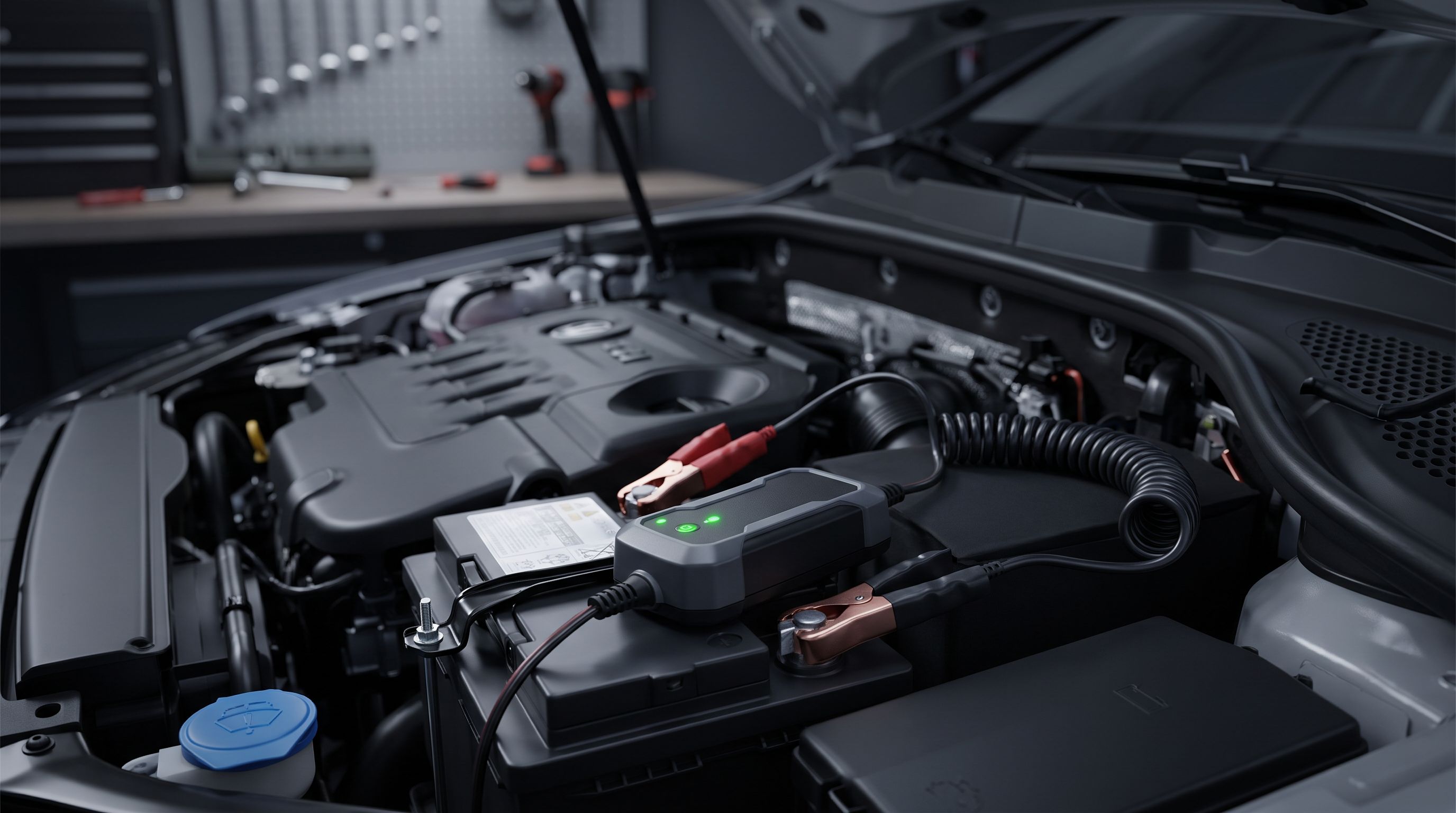
Reader-supported: we may earn a commission from links on this page, at no extra cost to you. It never affects our picks. Learn more.
A stored car doesn't kill its battery by sitting. It kills it by sitting at a partial state of charge. Every week a lead-acid battery spends below about 80% charge, lead sulfate crystals harden on the plates and permanently take capacity off the table. Add modern parasitic draw — alarm modules, telematics, keyless entry receivers pulling 20–50mA around the clock — and a healthy 60Ah battery can be flat in six to ten weeks of garage time.
A maintainer fixes that. But the one you buy should match your battery's amp-hour rating, its chemistry, and where the car actually sits. Below is how to do that math, plus four maintainers we ranked by comparing manufacturer spec sheets, independent test results, and long-term owner feedback.
The short version
- Best overall for long-term storage: NOCO Genius1 1-Amp Smart Charger
- Best simple set-and-forget maintainer: Battery Tender Junior 750mA 12V
- Best for big AGM and dual-battery setups: NOCO Genius5 5-Amp Smart Charger
- Best dual 6V/12V pick for classics: Battery Tender 3-Amp Selectable Charger
- Best multi-stage charger with real recovery power: Schumacher SC1280 6/12V Charger
 Best simple set-and-forget maintainer · Battery Tender Junior 750mA 12V — Check price on Amazon →
 Best overall for long-term storage · NOCO Genius1 1-Amp Smart Charger — Check price on Amazon →
The amperage math, simplified
There are two jobs here and they want different amperages.
Job one: maintaining. You only need to replace self-discharge plus parasitic draw. A flooded lead-acid battery self-discharges roughly 4–6% per month at 25°C; AGM is closer to 1–3%. Add a typical parasitic load and you're looking at maybe 10–30mA of continuous replacement. Any maintainer from 750mA up will handle that with room to spare. More amps buys you nothing here.
Job two: recharging. This is where Ah matters. The usual rule of thumb from battery manufacturers is to charge a lead-acid battery at roughly 10% of its 20-hour Ah rating — so a 60Ah battery wants about 6A for a brisk recharge. At 1A, that same battery recovering from 50% depth of discharge takes something like 30+ hours of charger time once you account for stage inefficiency. That's fine if the car is stored and you're not in a hurry. It's miserable if you pulled the battery out of a dead project car on a Saturday morning.
So the honest answer: if the battery goes on the maintainer fully charged and stays there, 0.75–1A is plenty regardless of Ah. If the charger also has to resurrect batteries, size by capacity.
| Battery capacity (20hr Ah) | Typical vehicle | Maintain-only amps | Recharge-capable amps | Rough 1A recharge time from 50% |
|---|---|---|---|---|
| 8–20Ah | Motorcycle, classic bike, mower | 0.75–1A | 1–2A | 5–12 hrs |
| 35–50Ah | Miata, Mini, small classic | 0.75–1A | 4–5A | 20–30 hrs |
| 50–70Ah | Most sedans, modern compacts | 1A | 5A | 30–40 hrs |
| 70–95Ah (often AGM) | SUVs, stop-start cars, trucks | 1–2A | 5–10A | 40–55 hrs |
| 95Ah+ or dual-battery | Diesel trucks, RVs, camper setups | 2A | 10–15A | Not practical |
Those recharge times are approximations based on typical charger efficiency and multi-stage profiles, not a manufacturer figure. Treat them as a planning guide.
How to choose
1. Match the chemistry mode, not just the voltage
This is the single most common buying mistake in 2026, because battery chemistry has fragmented. A flooded lead-acid battery wants an absorption voltage around 14.4–14.7V and a float near 13.2–13.6V. An AGM wants a tighter window — overcharging an AGM cooks off electrolyte it can't replace. And a LiFePO4 lithium battery wants a completely different profile: constant current to roughly 14.6V, then effectively nothing. Floating a lithium pack at lead-acid float voltage is a good way to shorten its life or trip its BMS repeatedly.
Check your battery's label or spec sheet. If it says AGM, EFB, or lithium, buy a charger with that explicit mode. The NOCO Genius1 and Genius5 both carry dedicated AGM and lithium settings; the Battery Tender Junior is a lead-acid/AGM float maintainer and is not the right tool for a lithium pack.
2. Decide whether it ever has to recover a dead battery
If your workflow is "charge the battery fully, then connect the maintainer before storage," a 1A unit is the correct, cheap, efficient answer. If your garage has a habit of producing surprises — a classic that got left with the dome light on, a second car you only check monthly — step up to 5A so a recovery doesn't eat a whole weekend. The Genius5 and the Schumacher SC1280 both cover that case; the SC1280 goes further with a high-amp engine-start function.
3. Think about where it's mounted and how cold it gets
Garage temperature changes charging behavior. Cold batteries need a higher absorption voltage; warm ones need less. Chargers with temperature compensation (built-in thermal sensing) adjust for this automatically, and it matters most in unheated northern garages and hot southern ones. NOCO's Genius line includes a cold-weather mode for this reason.
Also look at ingress protection and mounting. If the maintainer lives on a shelf in a dry garage, almost anything works. If it's zip-tied in a wheel well on a car under a carport, you want a sealed, potted enclosure and a proper eyelet pigtail with an inline fuse — not alligator clips flapping in the weather.
4. Plan the connection before you plan the charger
The ring-terminal pigtail is the under-appreciated half of this setup. Bolt it permanently to the battery terminals (or to a remote jump post if the battery is buried in a trunk or under a seat), route the quick-connect somewhere reachable, and you'll never fight with clamps again. Battery Tender and NOCO both use their own connector standards, so buy spare pigtails from the same brand you commit to. Fuse the positive lead — most quality pigtails include one.
5. Confirm it's safe to leave connected indefinitely
"Trickle charger" and "maintainer" are not synonyms. An old-school unmanaged trickle charger pushes constant current forever and will boil a battery dry over a winter. A modern maintainer is microprocessor-controlled: it charges in stages, drops to float or pulsed maintenance, and monitors voltage continuously. Every pick here is in the second category. If a charger doesn't advertise automatic multi-stage operation and a float/maintenance mode, don't leave it connected unattended.
The picks
NOCO Genius1 — best overall for long-term storage
Prices last checked October 24, 2026. Amazon prices change frequently, so treat these as a guide and check the live price before you buy.
NOCO Genius1 1-Amp Smart Charger
1A output, 12 charging modes including AGM and lithium, and a repair mode for sulfated batteries.
The Genius1 is the maintainer we'd put on a car going into a six-month hibernation. It's a 1A unit with 12 selectable modes covering 6V and 12V, flooded, gel, AGM, EFB, and lithium, plus a cold-weather setting and a force/repair mode that attempts to recover deeply discharged or sulfated batteries other chargers refuse to see. It's fully sealed, rated for outdoor use, and small enough to tuck behind a bumper. Independent roundups have repeatedly named it a top overall choice, and owner feedback over multiple winters is consistently strong.
What it gives up: at 1A, it is slow as a recovery charger. A dead 70Ah battery will take days. Buy it as a maintainer, not a workshop charger.
Battery Tender Junior — best simple set-and-forget maintainer
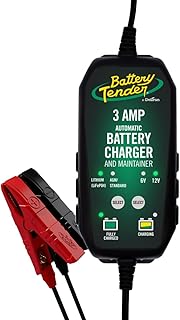
Battery Tender 3-Amp Selectable Charger
Switchable 6V/12V output suits pre-1956 classics as well as modern 12V lead-acid and AGM.
The 750mA Battery Tender Junior is the default answer for a reason. It's four-stage, it floats at a safe voltage, it's compact, and the single status LED tells you everything you need: red means charging, green means done. There's nothing to configure and nothing to get wrong. For a seasonal classic, a convertible, or a motorcycle parked between October and April, it's hard to beat — and the ecosystem of Battery Tender ring-terminal and clamp pigtails is huge, so adding a second or third vehicle costs very little.
What it gives up: no lithium mode, no mode selection at all, and at 750mA it's purely a maintainer. It also has no repair function for a battery that's already sulfated.
NOCO Genius5 — best for big AGM and dual-battery setups

NOCO Genius5 5-Amp Smart Charger
5A recharges a drained 70–100Ah AGM in a reasonable timeframe, then drops to maintenance.
Step up to the Genius5 when the battery is large, the chemistry is AGM, or you need the charger to do real work. Five amps is enough to meaningfully recharge a 70–100Ah AGM overnight-plus, then drop into maintenance mode indefinitely. It keeps the full Genius mode set — AGM, lithium, 6V, cold weather, repair — and adds a supply/power-supply mode useful for holding voltage during module programming or long diagnostic sessions. For trucks, SUVs with stop-start systems, or a garage with two or three vehicles rotating through, it's the more flexible buy.
What it gives up: it's physically bigger and costs more than a 1A unit, which is overkill if you only ever maintain one small battery.
Battery Tender 3-Amp Selectable — best dual 6V/12V pick for classics
Pre-1956 American iron, early VWs, vintage tractors and some British classics run 6V positive-ground systems, and a 12V-only charger is useless to them. The Battery Tender 3-Amp selectable model switches between 6V and 12V output and handles flooded and AGM batteries with a proper multi-stage profile. Three amps is a sensible middle ground: fast enough to recharge the small 50–80Ah 6V batteries common in classics within a day, gentle enough to float a motorcycle battery safely. Independent reviewers have praised the current Battery Tender 3A unit specifically for how easy it is to operate.
What it gives up: no lithium mode, and the 6V/12V switch is something you must set correctly — get it wrong and you'll either undercharge or badly overcharge.
Schumacher SC1280 — best multi-stage charger with real recovery power

Schumacher SC1280 6/12V Charger
Steps from maintenance up to 30A engine start, so one unit covers storage and dead-battery rescue.
If you want one box that maintains a stored car and rescues a dead one, the SC1280 is the pragmatic choice. It's a 6V/12V automatic charger with multiple rate settings running from a low maintenance current up to a high-amp engine-start boost, with a digital display showing charge state. Third-party testing has highlighted it as one of the faster chargers in its class. For a home garage that also deals with a boat, a lawn tractor and a teenager's first car, it earns its shelf space.
What it gives up: it's a bench charger, not a hidden-under-the-hood maintainer. It's bulkier, it's not sealed for outdoor mounting, and it's more than most people need for a single stored classic.
Storage setup checklist
- Charge fully before storage. Don't ask a 1A maintainer to do a recharge job. Top the battery up first.
- Clean the terminals. Corrosion creates resistance; resistance means the maintainer sees a different voltage than the battery does.
- Install a fused ring-terminal pigtail. Route the connector somewhere you can reach without opening the hood.
- Set the correct mode — AGM, lithium, or standard — and verify the voltage selection on dual-voltage units.
- Check it monthly. A green light is not proof of health. Once a month, glance at the LED and, if you have a multimeter, confirm the battery is sitting around 12.7–12.9V when the maintainer is disconnected.
- Don't disconnect the battery and the maintainer both. Pulling the negative terminal stops parasitic draw but also stops the maintainer from working, and on many modern cars it wipes learned fuel trims and radio codes.
FAQ
Can I leave a battery tender connected all winter? Yes — if it's a genuine automatic multi-stage maintainer like the ones here. They drop to float or pulsed maintenance once the battery is full and monitor voltage continuously. Avoid unregulated trickle chargers, which push current indefinitely and can dry out a flooded battery.
Does a bigger battery need a bigger maintainer? Not for maintaining. Self-discharge and parasitic draw are measured in milliamps regardless of Ah. Capacity only matters for recharge speed — that's when the "10% of Ah" rule applies.
Will a lead-acid maintainer hurt a lithium (LiFePO4) battery? It can. Lithium batteries need a different charge profile and don't want to be held at a lead-acid float voltage. Use a charger with an explicit lithium mode, such as the NOCO Genius1 or Genius5, and confirm your battery's BMS allows external charging.
Is my battery AGM or flooded? Check the label. AGM batteries usually say "AGM," "Absorbed Glass Mat," or "valve regulated / VRLA," and have sealed, non-removable caps. If your car has stop-start, it's almost certainly AGM or EFB. When in doubt, look up the OE battery spec for your exact year, make, model and trim before choosing a charging mode.
Do I need a solar maintainer instead? Only if there's no outlet. Solar panels work for carports and outdoor storage, but output collapses in winter, under snow, or in a shaded spot — and most small panels need a proper charge controller to avoid overcharging. If mains power is available, use it.
My maintainer shows green immediately on a dead battery. What's wrong? Usually one of two things: the battery voltage is too low for the charger to detect (many units won't start below about 2–3V), or an internal cell has failed open. Try a charger with a force/repair mode like the Genius1, and if it still won't take a charge, the battery is done.
Our picks
Battery Tender Junior 750mA 12V
The classic 750mA float maintainer: plug it in, watch for green, ignore it for six months.
Get the best car care deals in your inbox
Join the GarageProof newsletter for hand-picked car care deals and new buying guides. No spam, unsubscribe anytime.
Related reads
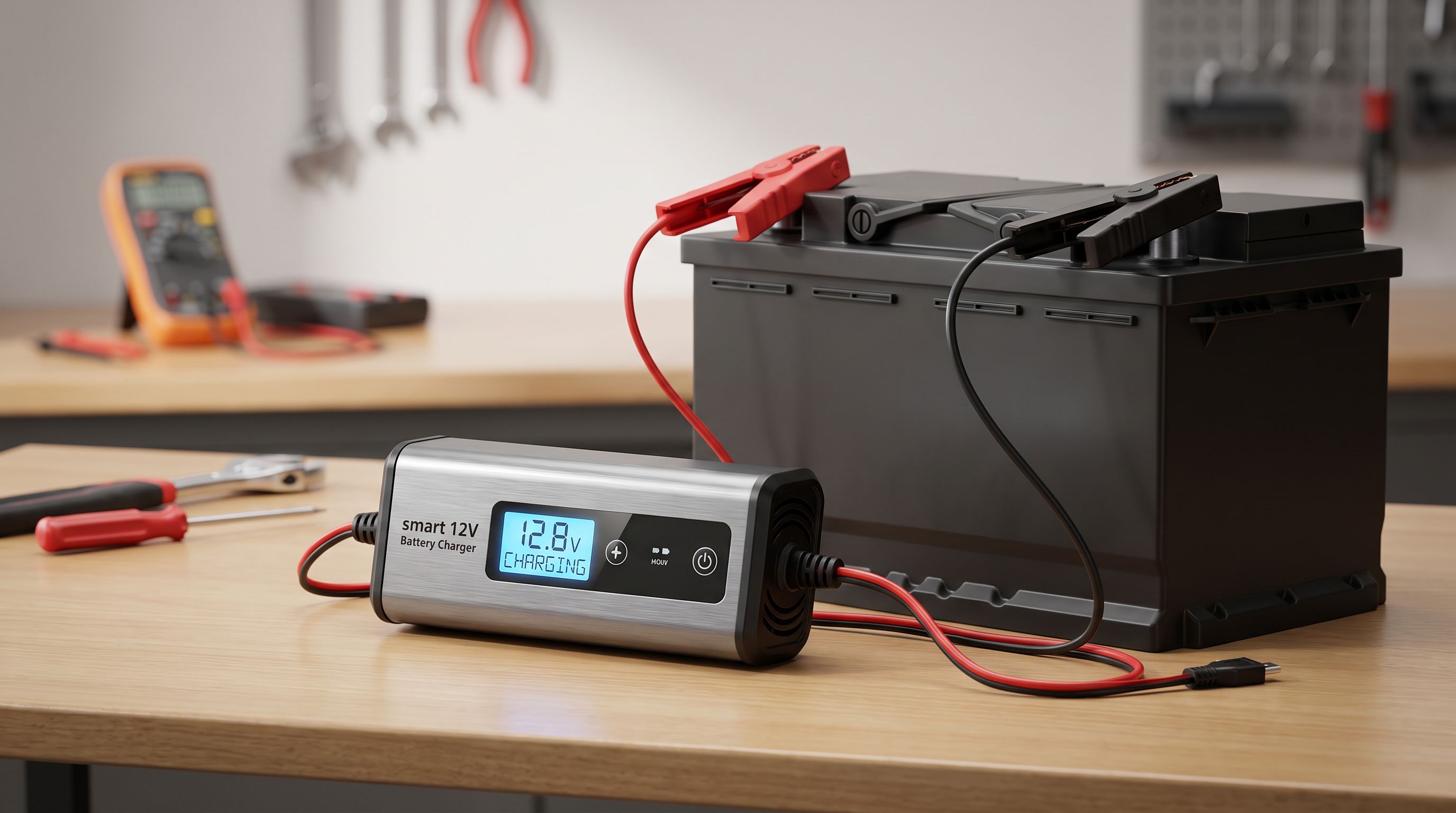
Battery Charger Maintainer Guide 2026: AGM vs Lithium Modes
AGM and lithium batteries need different charge profiles. Here's how to pick a smart battery charger maintainer in 2026, plus amps, desulfation and repair modes explained.
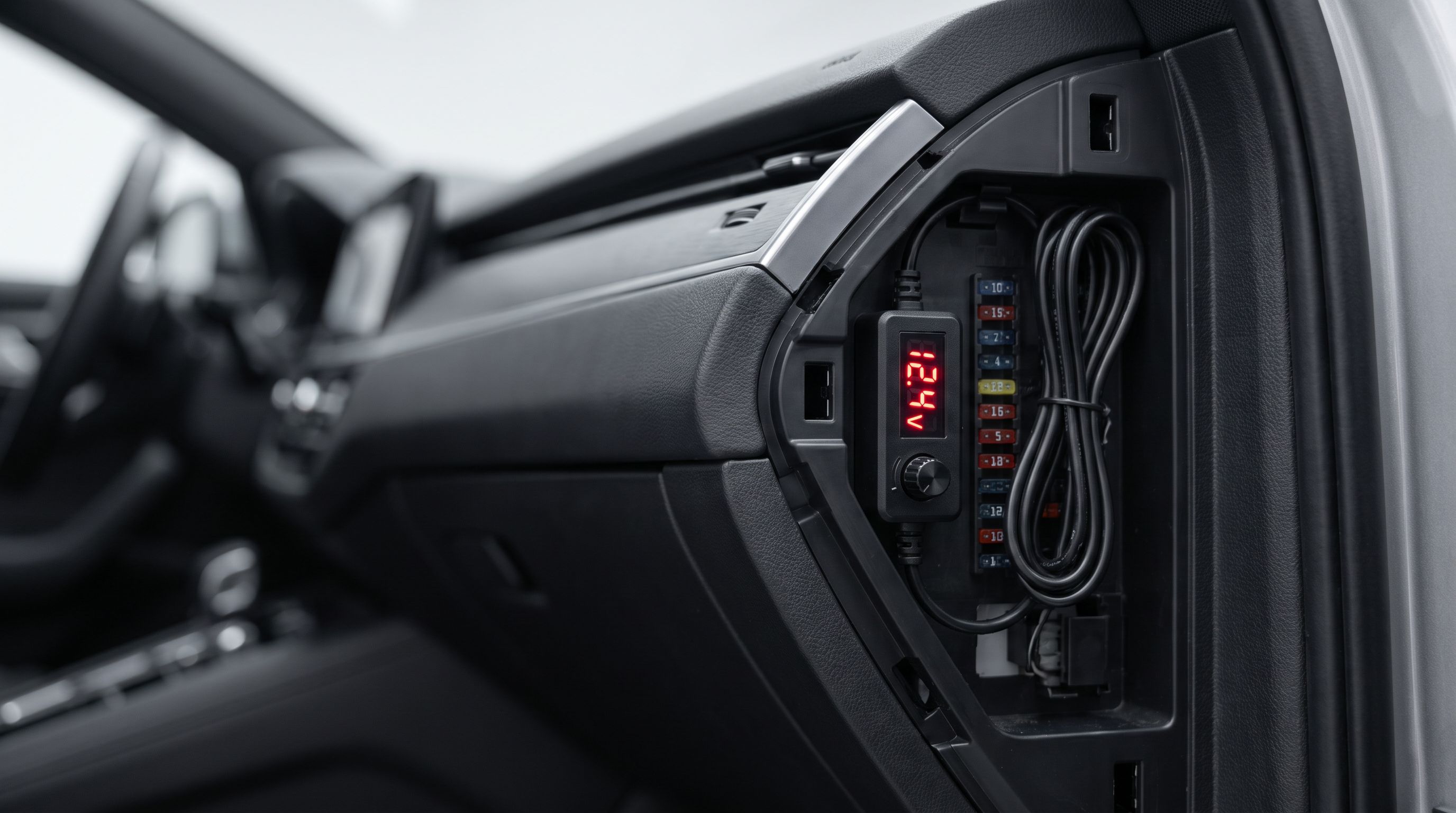
Dash Cam Hardwire Voltage Cutoff 2026: Match It to Your Battery
How to set dash cam hardwire voltage cutoff for AGM, flooded, and stop-start batteries in 2026 — plus four hardwire kits with user-adjustable cutoff points.
Bluetooth Car Battery Monitors 2026: Shunt or Terminal Clamp?
Compare Bluetooth car battery monitors for 2026: terminal clamps vs shunts, AGM and lithium profiles, parasitic drain logging, and terminal fitment checks.