Battery Powered Pressure Washer 2026: PSI That Still Cleans
Cordless vs corded for car washing in 2026: real PSI and GPM at the nozzle, runtime per battery, tank-draw limits, and five picks that actually rinse a car clean.
Reader-supported: we may earn a commission from links on this page, at no extra cost to you. It never affects our picks. Learn more.
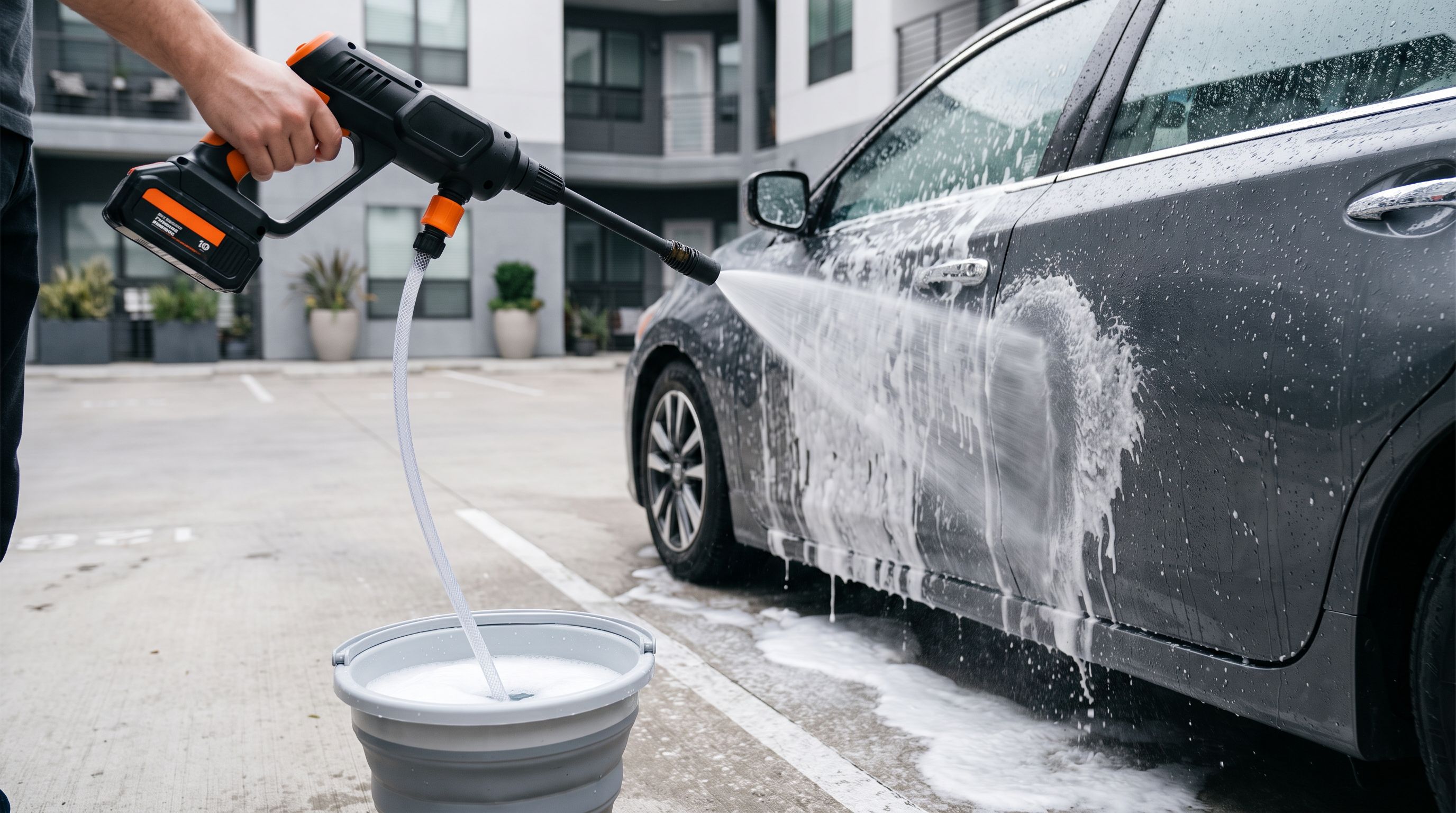
If you live in an apartment, park in a shared lot, or have a driveway with no spigot anywhere near it, a cordless pressure washer looks like the obvious answer. Drop a suction hose in a bucket, clip in a battery, walk to the car. No outlet, no hose reel, no extension cord snaking across a sidewalk.
The catch is physics. A pressure washer's cleaning power is pressure multiplied by flow, and flow is where battery units give ground. Most cordless washers move well under a gallon per minute, while a decent corded unit moves roughly 1.1 to 1.4 GPM. That difference shows up as rinse time, not as a dramatic failure to clean — but it absolutely shows up.
We compared current cordless and corded models on published specs, independent test results from outlets that run them side by side, and a large volume of owner feedback about the stuff spec sheets never mention: how long a 4.0Ah pack actually lasts, whether the pump will pull from a bucket at the bottom of the bucket, and how fast the trigger gets tiring.
The short version
- Best overall: EGO Power+ HPW3200 3200 PSI Pressure Washer
- Best for apartment car washing: Ryobi RY40HPPW12B 40V HP Brushless 1200 PSI Cordless Pressure Washer
- Best compact rinser: DeWalt DCPW550B 20V MAX 550 PSI Cordless Power Cleaner
- Best corded alternative: Greenworks 2000 PSI TruBrushless Electric Pressure Washer
- Best value corded: Craftsman CMEPW2100 2100 PSI Electric Pressure Washer
 Best value corded · Craftsman CMEPW2100 2100 PSI Electric Pressure Washer — Check price on Amazon →
 Best overall · EGO Power+ HPW3200 3200 PSI Pressure Washer — Check price on Amazon →
Cordless vs corded vs gas: what you're actually trading
Here's the honest hierarchy for washing a car.
Gas gives you 2800–3400 PSI and 2.5+ GPM, which is more than any car needs and genuinely risky on clear coat, trim, and old decals. It's also loud, needs fuel, and is a terrible neighbor in a shared lot. For car washing specifically, gas is overkill.
Corded electric is the sweet spot for cleaning power per dollar. 1800–2100 PSI with 1.1–1.3 GPM strips bug splatter, flushes wheel wells, and runs a foam cannon properly. You pay for it with a 35-foot cord, a GFCI outlet requirement, and a garden hose connection.
Cordless buys you true portability. You give up flow — most of these move 0.5 to 0.9 GPM — and you give up unlimited runtime. In exchange you can wash a car in a parking garage with nothing but a five-gallon bucket.
For context, a standard garden hose nozzle delivers maybe 40–60 PSI. Even a 550 PSI cordless unit is a dramatic upgrade in rinsing ability over that. The question is only whether you need 2000 PSI, and for paint, you genuinely don't — most detailers run car-wash work well under 1500 PSI with a wide-angle tip anyway.
The foam cannon problem
This is the single most common cordless disappointment. Most foam cannons are designed around roughly 1.4 GPM and a minimum pressure in the 1000–1500 PSI range. Feed one with a 0.5 GPM cordless unit and you get wet soap, not shaving-cream foam. Some manufacturers sell low-flow foamers matched to their own cordless washers — buy those, or accept that you'll be pre-soaking with a pump sprayer and using the washer purely to rinse. That's a perfectly reasonable workflow and it's how a lot of apartment detailers actually operate.
Comparison table
| Model | Power source | Rated PSI | Approx. flow | Draws from bucket? | Best for |
|---|---|---|---|---|---|
| EGO Power+ HPW3200 | 56V battery (multi-pack) | 3200 | ~1.2 GPM class | Yes, with suction kit | Replacing a gas washer without gas |
| Ryobi RY40HPPW12B | 40V battery | 1200 | Sub-1 GPM | Yes, included hose | Apartment car washing |
| DeWalt DCPW550B | 20V MAX battery | 550 | Low | Yes, included hose | Wheels, bikes, quick rinses |
| Greenworks 2000 PSI TruBrushless | Corded 120V | 2000 | ~1.2 GPM class | No, garden hose | Driveway + car, all-round |
| Craftsman CMEPW2100 | Corded 120V | 2100 | ~1.2 GPM class | No, garden hose | Best cleaning per dollar |
Flow figures vary by nozzle and by how manufacturers measure; treat them as class indicators, not guarantees. Always check the spec plate on the unit you buy.
The picks
EGO Power+ HPW3200 — best overall
Prices last checked October 23, 2026. Amazon prices change frequently, so treat these as a guide and check the live price before you buy.
EGO Power+ HPW3200 3200 PSI Pressure Washer
The only cordless unit that genuinely competes with a gas washer — but it needs two to four batteries.
This is the cordless washer that stops being a compromise. EGO's 3200 PSI unit runs on multiple 56V packs simultaneously and puts out pressure and flow in genuine gas-washer territory, which is why it keeps winning "best battery power" spots in independent roundups. For car work you'll want the 40-degree tip, not the pencil jet — 3200 PSI at close range will absolutely mark soft paint and peel old vinyl.
What it gives up: cost and battery logistics. You need several high-capacity EGO packs to get meaningful runtime, and if you don't already own EGO yard tools, the entry price is steep. It's also heavy and bulky compared to the handheld units here. Buy it if you want one machine for the car, the siding, and the driveway.
Ryobi RY40HPPW12B — best for apartment car washing

Ryobi RY40HPPW12B 40V HP Brushless 1200 PSI Cordless Pressure Washer
Draws from a bucket or lake, 1200 PSI at useful flow, and runs on the same 40V packs as Ryobi yard tools.
The 40V HP Brushless 1200 PSI model is the most sensible cordless choice for someone whose main job is washing a car without a spigot. It ships with a suction hose so it can draw straight from a bucket, a lake, or a rain barrel, and 1200 PSI with a fan tip is plenty of pressure to flush grit off paint and blast out wheel barrels.
Runtime is the honest limitation. Owners typically report somewhere in the range of 10–20 minutes of trigger time on a mid-size 40V pack, which is enough for a rinse but not for a long session unless you own a second battery. Ryobi's 40V ecosystem is huge, though, so spare packs are easy to come by and double as mower or blower batteries.
DeWalt DCPW550B — best compact rinser

DeWalt DCPW550B 20V MAX 550 PSI Cordless Power Cleaner
Pocketable, bucket-fed, and perfect for rinsing wheels and panels if you already own 20V MAX packs.
The 550 PSI 20V MAX power cleaner is the smallest useful tool in this guide. It's a handheld wand with an inlet hose you drop in a bucket, and it's sold as a bare tool so it slots in cheaply if you already have DeWalt 20V MAX packs from your drill or impact driver.
At 550 PSI it's not a driveway cleaner and it won't drive a conventional foam cannon. What it does well is targeted work: rinsing wheels and wheel wells, knocking mud off floor mats, cleaning bikes and dogs and coolers, and doing a quick road-salt rinse in winter. Treat it as a very good portable rinser rather than a pressure washer and it's excellent. Treat it as a replacement for a corded unit and you'll be disappointed.
Greenworks 2000 PSI TruBrushless — best corded alternative

Greenworks 2000 PSI TruBrushless Electric Pressure Washer
If you have an outlet, this delivers steady 2000 PSI with no runtime math and no battery budget.
If there is any outlet within 35 feet of where you park, this is the more capable machine. The TruBrushless motor family has rated well in third-party testing for sustained pressure and quieter operation than universal-motor washers, and 2000 PSI with real flow means a proper foam cannon works, bug residue comes off without scrubbing, and you're not watching a battery gauge.
The trade is obvious: you need a GFCI outlet and a garden hose connection, which rules it out for a lot of apartment dwellers. It's also a wheeled unit to store rather than something that lives in a tote. Brushless corded washers tend to last longer under repeated use than cheap brushed ones, which matters if you wash weekly.
Craftsman CMEPW2100 — best value corded
Craftsman CMEPW2100 2100 PSI Electric Pressure Washer
A no-drama 2100 PSI corded unit that out-cleans every cordless washer per dollar.
The CMEPW2100 took best overall in at least one major car-washing pressure washer test, and the reason is unglamorous: it's a straightforward 2100 PSI electric unit that delivers consistent pressure, includes the nozzle set you actually need, and doesn't cost much. For pure cleaning-power-per-dollar on a car, nothing cordless comes close.
It gives up portability entirely, and the included hose and wand are functional rather than premium — many owners swap to a longer, more flexible aftermarket hose. If your situation allows a cord and a hose bib, start here and spend the savings on a decent foam cannon, two buckets with grit guards, and a drying towel.
How to choose
Match PSI to the job, not to the box
For paint, anything from 1200 to 2000 PSI with a 25- or 40-degree tip is appropriate. Higher numbers aren't better on a car; they're just a bigger margin for error. Where PSI genuinely helps is everything else — concrete, siding, trailers, grimy wheel wells. If the car is 90% of your use case, a 1200 PSI cordless unit is not undergunned. If the driveway is 50% of it, buy corded or buy the EGO.
Flow (GPM) decides rinse time and foam quality
Pressure removes dirt; flow carries it away. Two machines at the same PSI but 0.6 vs 1.2 GPM will feel completely different — the low-flow one takes roughly twice as long to sheet soap off a hood. Check GPM on the spec sheet before you check PSI. And if foam matters to you, confirm the foam cannon you plan to use lists a minimum flow your washer can meet.
Battery math: capacity, voltage, and spares
Cordless runtime scales with amp-hours, and these pumps are power-hungry. A 2.0Ah pack on a 1200 PSI unit is a few minutes of trigger time; a 6.0Ah or larger pack is a realistic single-car wash. The practical rule from owner reports: budget for two large batteries, and buy into a platform you already own or plan to expand. Bare-tool versions save real money if you've got packs on the shelf — but only if the voltage matches.
Tank-draw and suction limits
Self-priming suction is the whole point of a cordless washer, and it has limits manufacturers spell out: typically a maximum lift of a few feet, a requirement that the inlet filter stay submerged, and a warning not to run the pump dry. In practice, that means keeping the bucket on the ground next to the unit rather than up on a tailgate, and watching the water level. Five gallons goes quickly at even 0.6 GPM — think eight to ten minutes of continuous trigger, which is why most people run two buckets or refill mid-wash.
Nozzles, hoses, and what's in the box
Cordless units often use proprietary quick-connects or integrated multi-nozzle heads rather than standard 1/4-inch fittings, which limits aftermarket tips and foamers. Check that before you buy accessories. Also check hose length — a short high-pressure hose means dragging the whole unit around the car, which is fine for a lightweight handheld and annoying for a wheeled one.
FAQ
Will a battery pressure washer actually clean a dirty car? Yes, for normal road film, dust, and light mud. A 1200 PSI cordless unit with a fan tip rinses a car perfectly well. Where it struggles is caked-on mud, baked bug residue, and anything that needs sustained flow to flush away. Pre-soak with a pump sprayer and the gap narrows a lot.
How long does a battery last per charge? Plan on roughly 10–20 minutes of actual trigger time on a mid-size pack for a 1200 PSI-class unit, less on small packs and more on high-capacity ones. Because you're not holding the trigger continuously during a wash, that often covers one vehicle — but a spare battery removes all the anxiety.
Can I use a foam cannon with a cordless pressure washer? Only if the cannon's minimum flow requirement matches your washer. Most standard cannons want around 1.4 GPM and won't foam properly below that. Look for a low-flow foamer sold specifically for cordless units, or pre-foam with a dedicated battery foam sprayer and use the washer to rinse.
Is 2000 PSI too much for car paint? Not if you use the right tip and keep sensible distance. Use a 25- or 40-degree nozzle, stay roughly 12 inches back, and never hold a 0-degree jet on paint, trim, badges, or around window seals. Damage comes from narrow tips held close, not from the rating on the box.
Can it draw water from a bucket or a rain barrel? Cordless models designed for it ship with a suction hose and filter, and yes, they self-prime from a bucket, barrel, lake, or pool. Corded garden-hose washers generally cannot — they need pressurized supply water. Check the manual for maximum suction lift and keep the filter fully submerged.
Cordless or corded if I have a garage outlet? Corded, almost every time. You get more flow, unlimited runtime, and better cleaning per dollar. Cordless makes sense when the lack of an outlet or a hose bib is the actual constraint — which, for apartment owners, it usually is.
Get the best car care deals in your inbox
Join the GarageProof newsletter for hand-picked car care deals and new buying guides. No spam, unsubscribe anytime.
Related reads
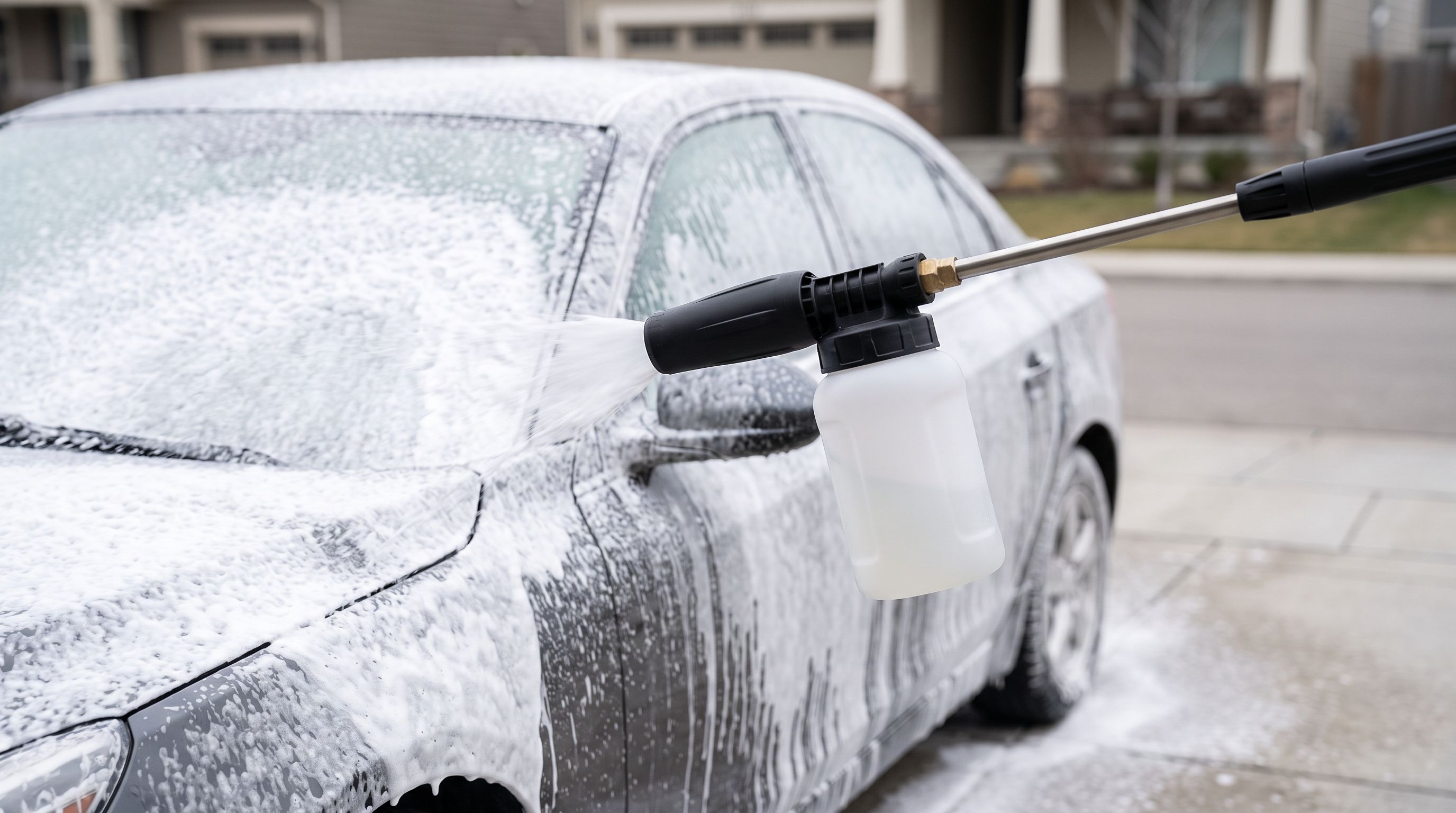
Foam Cannon Buying Guide 2026: Match Orifice to Your Washer
The best foam cannon for your pressure washer depends on orifice size, GPM and quick-connect fit. Here's how to match them — plus four picks for 2026.
Ceramic Coating Maintenance Shampoo 2026: pH That Won't Strip
How to pick a coating-safe car shampoo in 2026: pH-neutral vs SiO2 toppers, gloss boosters, dilution ratios and the washing habits that actually kill ceramic coatings.
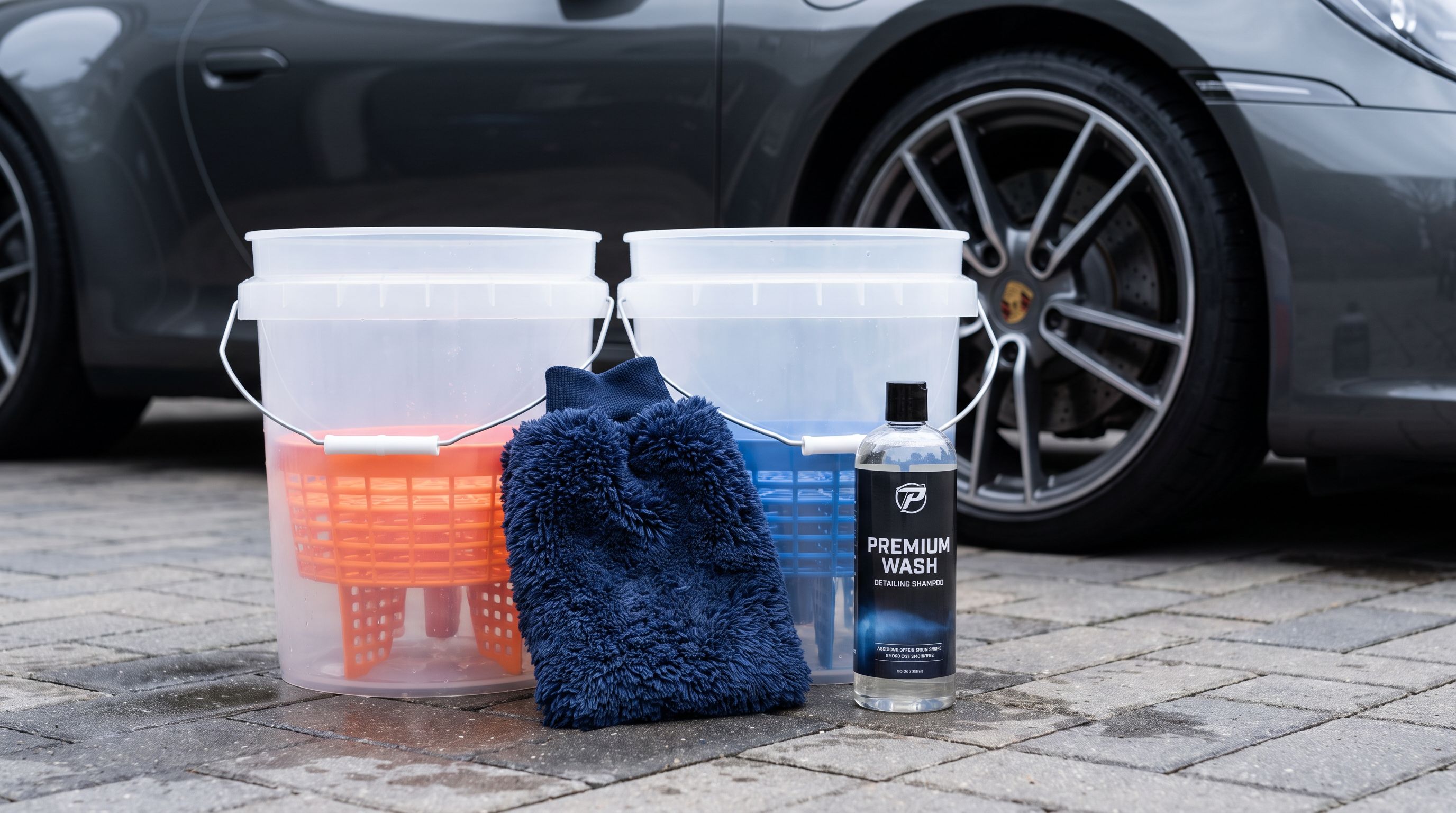
Car Wash Bucket Kit 2026: Grit Guards, Sized Right
Our 2026 guide to the car wash bucket kit: grit guard inserts, 3.5 vs 5 gallon buckets, wash mitts and dollies — picks for sedans, trucks and tight garages.