Battery Charger Maintainer Guide 2026: AGM vs Lithium Modes
AGM and lithium batteries need different charge profiles. Here's how to pick a smart battery charger maintainer in 2026, plus amps, desulfation and repair modes explained.
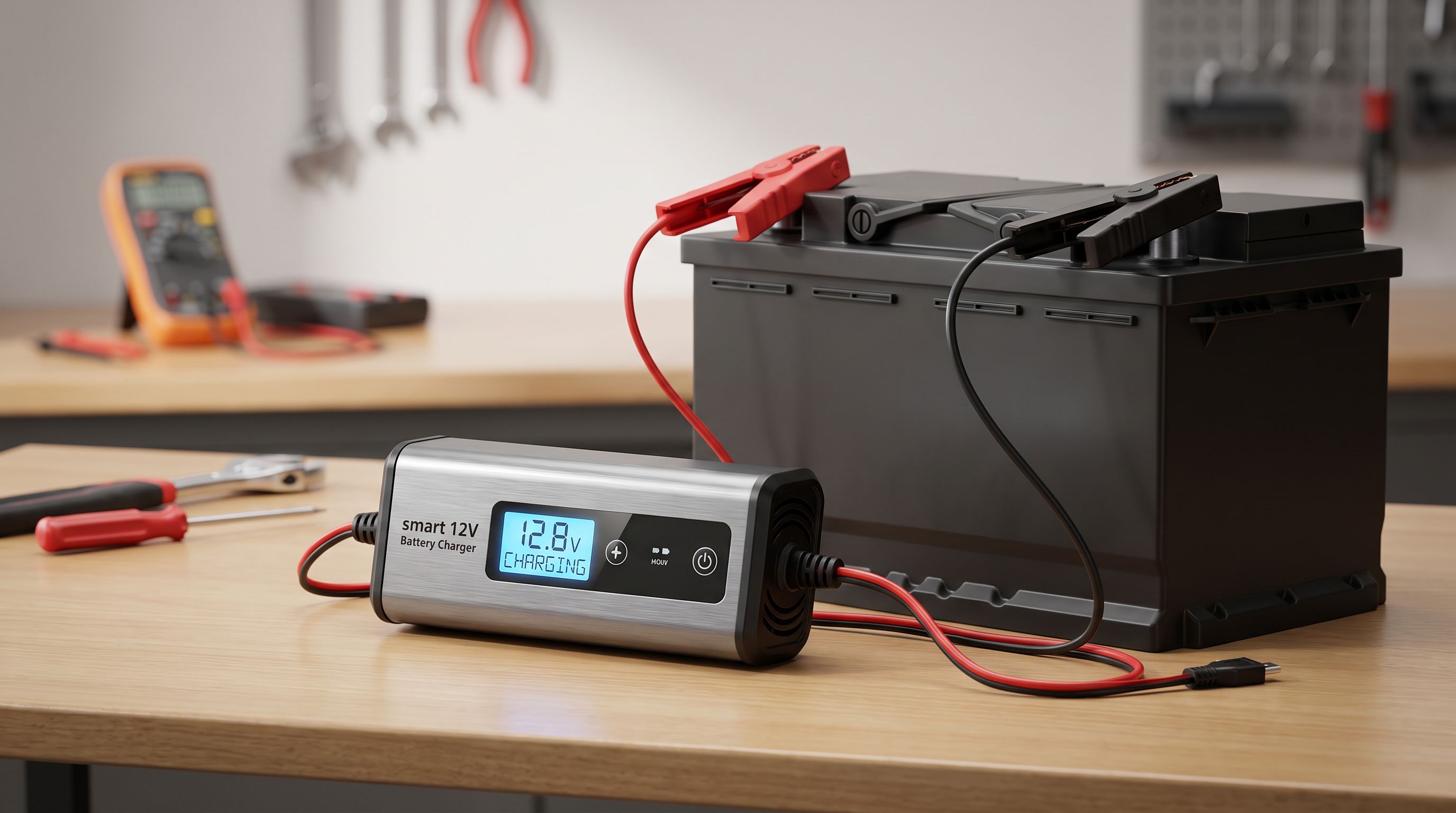
Reader-supported: we may earn a commission from links on this page, at no extra cost to you. It never affects our picks. Learn more.
Battery chemistry stopped being a footnote a few years ago. Walk into any parking lot in 2026 and you'll find flooded lead-acid batteries, AGM batteries in nearly every start-stop car, and a growing number of LiFePO4 packs in motorcycles, powersports machines and RV house banks. Each wants a different voltage, a different absorption behaviour, and a very different attitude toward "desulfation" pulses.
Using the wrong mode usually won't produce a dramatic failure on day one. It quietly shortens battery life — or, in the case of running a lead-acid desulfation pulse into a lithium pack, risks confusing or tripping the battery management system. Picking a charger that explicitly matches your chemistry is the single highest-value decision here, well ahead of amp ratings or screen size.
We compared the current mainstream smart chargers on manufacturer charge profiles, published amp ratings, chemistry support, and patterns in expert reviews and verified owner feedback. Here's what's worth buying and, more importantly, how to match it to what's actually under your hood.
The short version
- Best overall for maintenance: NOCO Genius1 1A Smart Charger
- Best do-everything charger: NOCO Genius10 10A Smart Charger
- Fastest for big batteries: Battery Tender 15 Amp Battery Charger and Maintainer
- Budget pick: Battery Tender Junior 12V 750mA
- Best for jump-start backup: Schumacher SC1280 Battery Charger
 Best for jump-start backup · Schumacher SC1280 Battery Charger — Check price on Amazon →
 Budget pick · Battery Tender Junior 12V 750mA — Check price on Amazon →
 Best overall for maintenance · NOCO Genius1 1A Smart Charger — Check price on Amazon →
Why AGM and lithium modes actually matter
A "smart charger" is really a small computer running a multi-stage voltage curve. The stages — bulk, absorption, float or storage — are tuned per chemistry, and the differences are meaningful.
Flooded lead-acid tolerates a relatively high absorption voltage and benefits from mild gassing, which stirs the electrolyte. It's the most forgiving chemistry and the one every charger supports.
AGM is a sealed, valve-regulated design. It can't be topped up with water, so overcharging permanently dries it out. Most AGM profiles use a slightly different absorption voltage than a standard flooded setting and taper more conservatively. Many performance and start-stop AGM batteries also want a higher-than-normal absorption voltage — which is why some chargers list a separate "AGM+" or high-voltage AGM setting. If your car has stop-start, assume AGM (or EFB) unless the battery label says otherwise.
Lithium (LiFePO4) is the outlier. It charges to a different voltage, has essentially no float stage — you charge it and stop, rather than holding it at a trickle forever — and it relies on an internal BMS that can disconnect the pack. A lead-acid charger may see that disconnected pack as a dead battery and refuse to start, or may push a float voltage that keeps nudging the BMS awake. A proper lithium mode wakes the pack, charges to the right ceiling, and then stops or holds a low storage voltage.
The practical rule: never use a desulfation, repair or "recondition" mode on a lithium battery. Those modes exist to break down lead sulfate crystals on lead plates. Lithium doesn't sulfate, and the high-voltage pulses have no upside.
What desulfation and repair modes really do
This is where marketing gets loose. Desulfation is real chemistry — sulfate crystals genuinely form on lead plates that sit at partial charge — and a controlled high-voltage pulse can dissolve some of it on a mildly neglected battery. Independent testing over the years has been mixed: it can recover some capacity on a battery that's been sitting, and it does nothing for a battery with a shorted cell, warped plates or physical damage.
Treat these modes as a free lottery ticket on a battery you were about to replace anyway, not as a maintenance routine. If a charger's headline feature is "brings dead batteries back to life," discount it accordingly. The NOCO repair mode and Battery Tender's equivalents are genuinely useful occasionally; they are not a substitute for a battery in good health.
How to choose
Match the chemistry list, not the marketing
Read the actual mode list on the spec sheet. "Works with AGM" sometimes means the charger simply won't damage an AGM — not that it has a dedicated AGM voltage curve. You want to see named, selectable modes: 12V flooded, 12V AGM (ideally a high-voltage AGM option too), and 12V lithium/LiFePO4. If you run a 6V battery in a classic or a tractor, check for that separately — plenty of 12V-only chargers exist.
If you own a mix — an AGM in the daily driver, a lithium in the ATV, a flooded in the mower — a single multi-chemistry unit like the NOCO Genius10 saves you buying three chargers.
Size the amps to the battery, not your patience
A rough guideline: charge current should be somewhere around 10–25% of the battery's amp-hour capacity for a healthy full charge, and much lower for long-term maintenance.
- A 1A maintainer will hold almost any 12V battery topped up indefinitely, and will recharge a small powersports battery overnight. It will take days on a big group-65 truck battery.
- 5–10A is the sweet spot for cars and light trucks — a flat battery recovers overnight.
- 15A+ makes sense for deep-cycle, RV house banks, dual-battery setups and big diesels.
Bigger isn't automatically better. High current into a small motorcycle battery generates heat, and heat is what kills AGM. Most quality chargers let you select a lower rate for small batteries — use it.
Decide: maintainer, charger, or both
A maintainer is for a battery that's basically fine but sits — a convertible in winter, a bike, a classic, a boat. It supplies a low float or storage voltage indefinitely. A charger is for recovering a discharged battery quickly. Most modern units do both, but a 750mA device is a maintainer wearing a charger's badge, and a 15A unit is overkill as a permanent trickle source unless it drops properly into maintenance mode.
Check the safety and installation details
The non-negotiables in 2026: spark-proof reverse-polarity protection, short-circuit protection, automatic shutoff, and a mode that survives a power cut and resumes correctly. After that, look for an IP-rated sealed housing if the charger lives in a damp garage or on a boat, and included ring terminal eyelets with a weatherproof cap so you can pigtail a permanent connector to the battery — this is the single biggest quality-of-life upgrade for seasonal vehicles.
Finally: check whether your car needs the charger connected at the battery posts or at the under-hood jump points. On many modern vehicles with a battery sensor on the negative terminal, connecting the charger's negative clamp directly to the battery post rather than the chassis ground can confuse the charging system's state-of-charge calculation. Check your owner's manual — this varies by year, make and model.
Comparison table
| Model | Max output | Chemistries | Repair/desulfation | Best suited to |
|---|---|---|---|---|
| NOCO Genius1 | 1A | Lead-acid, AGM, lithium, 6V/12V | Yes | Long-term storage, bikes, small batteries |
| NOCO Genius10 | 10A | Lead-acid, AGM, lithium, 6V/12V | Yes | One charger for a whole garage |
| Battery Tender 15 Amp | Up to 15A (selectable) | Lead-acid, AGM, lithium | Yes | Trucks, RVs, deep-cycle banks |
| Battery Tender Junior | 750mA | Lead-acid, AGM | No | Simple seasonal float duty |
| Schumacher SC1280 | Multi-rate with engine-start boost | Lead-acid, AGM, gel | Yes | Garages needing occasional jump help |
Always confirm current mode support on the unit you buy — manufacturers revise firmware and feature sets between production runs.
NOCO Genius1 — best overall for maintenance
NOCO Genius1 1A Smart Charger
Tiny, weatherproof 1A maintainer with dedicated AGM, lithium and repair modes — ideal for storage duty.
The Genius1 is the charger most people should own if the job is "keep this battery healthy." It's roughly the size of a phone charger, sealed against moisture and dust, and offers separate 12V, 12V AGM, 12V lithium and 6V modes plus a force mode for batteries that have dropped too low for a normal charger to detect. At 1A it's a maintainer first: it'll hold a car battery indefinitely and slowly revive a small powersports battery, but it is not the tool for reviving a dead group-48 on a Sunday morning. Buy it for the bike, the boat, the winter car — then buy something bigger for recovery duty.
NOCO Genius10 — best do-everything charger
NOCO Genius10 10A Smart Charger
10A output plus AGM and lithium modes handles car, truck and deep-cycle batteries without a second charger.
If you're only buying one charger for a mixed garage, this is the pick. Ten amps recovers a typical car or light-truck battery overnight, and the same mode set as the Genius1 — flooded, AGM, lithium, 6V, repair, plus a cold-weather profile that adjusts voltage for low ambient temperatures — covers essentially everything a home mechanic owns. It's also a supply mode power source for keeping memory alive during a battery swap on some vehicles. Downsides: it's physically larger than a pocket maintainer, and it's more charger than a single motorcycle needs. The interface takes a minute to learn, and holding the mode button to confirm lithium is a deliberate, easy-to-fumble step.
Battery Tender 15 Amp Battery Charger and Maintainer — fastest for big batteries

Battery Tender 15 Amp Battery Charger and Maintainer
15A of selectable output for truck, RV and deep-cycle packs, with lead-acid, AGM and lithium profiles.
When the battery is a deep-cycle, an RV house bank, or a big diesel dual setup, 10A starts feeling slow. This Battery Tender puts out up to 15A with selectable lower rates, and supports lead-acid, AGM and lithium profiles, so it doubles as the shop charger for smaller batteries at a reduced setting. Battery Tender's reputation rests on float behaviour that genuinely holds a battery without cooking it, and this unit keeps that after the bulk charge finishes. What you give up is portability and price positioning — it's a bigger, heavier box than a pocket maintainer, and overkill if your fleet is one commuter car.
Battery Tender Junior 12V 750mA — budget pick
Battery Tender Junior 12V 750mA
Simple, proven 750mA float maintainer for a motorcycle, classic or seasonal car that just needs topping up.
The Junior has been the default answer for "my bike battery dies every winter" for years, and it still is. It's a 750mA float charger with a four-step curve, a simple LED status light, and no menu to get wrong. That last part is the point: plug it in, walk away, come back in spring. The trade-offs are real though — no lithium mode, so don't use it on a LiFePO4 powersports battery, and no repair mode. It's also slow by design; treat it strictly as a maintainer, not a recovery charger. For a lead-acid or AGM battery that just needs to not die in storage, it's hard to beat on value.
Schumacher SC1280 — best for jump-start backup
Schumacher SC1280 Battery Charger
Multi-rate charger with engine-start boost and AGM/gel support for garages that need occasional muscle.
Schumacher's SC1280 sits in a different niche: it's a wheeled-shop-charger mentality in a portable case, combining multi-rate charging with an engine-start boost function for when the battery is too flat to crank. It supports standard lead-acid, AGM and gel batteries with automatic voltage detection, which makes it a sensible garage backup for a household with several older vehicles. The compromise is chemistry coverage — this is a lead-acid-family tool, so if you're maintaining a lithium powersports pack you'll want a NOCO or Battery Tender alongside it. It's also not the unit to leave connected all season; use it to recover and start, then maintain with something smaller.
Practical setup tips
- Fit ring terminals. A permanent pigtail with a weatherproof cap on any seasonally stored vehicle turns a ten-minute job into a five-second one, and you'll actually do it.
- Charge in ventilated space. Even sealed AGM can vent under fault conditions. Never charge a battery inside a closed cabin.
- Check state of charge before you blame the charger. A 12V lead-acid battery at rest should read roughly 12.6–12.8V fully charged; around 12.0V is about half. A battery that won't hold above ~12.0V after a full charge cycle is telling you something.
- Cold matters. Lithium batteries should not be charged below freezing unless the pack has integrated heating. A good charger's lithium mode will not know your battery's temperature — you have to.
- Confirm fitment for your vehicle. Charging point location, whether the negative clamp goes to a post or a ground stud, and whether a battery replacement needs to be registered to the car all vary by year, make and model. Check the owner's manual before connecting.
FAQ
Can I use a lead-acid charger on a lithium battery? Not safely as a routine. A lead-acid profile charges to a different voltage and holds a float indefinitely, which lithium packs don't want. Some lithium BMS units will simply refuse the charge; others will accept it and slowly stress the cells. Use a charger with a dedicated lithium/LiFePO4 mode.
Is AGM mode necessary, or can I use the standard setting? You can usually charge an AGM on a standard smart-charger setting without immediate harm, but AGM mode exists because sealed batteries are less tolerant of overcharge and drying out. If the charger offers it, use it — there's no downside.
Does desulfation mode actually work? Sometimes, on a lead-acid battery that's been sitting at partial charge. It won't fix a shorted cell or a physically degraded battery. Try it once on a battery you were ready to replace; don't build a maintenance plan around it.
How many amps do I need? For maintaining, 1A is plenty. For recovering a car battery overnight, 5–10A. For deep-cycle, RV or dual-battery setups, 15A or more. Roughly 10–25% of the battery's amp-hour rating is a sensible charge rate.
Can I leave a smart charger connected all winter? Yes for lead-acid and AGM, with a quality maintainer that drops into float or storage mode — that's exactly what they're built for. For lithium, use a charger with a lithium storage mode, and check the manufacturer's guidance; many lithium packs are happiest stored at partial charge rather than held at 100%.
Will charging affect my car's electronics? On modern vehicles with a battery monitoring sensor, connecting the negative clamp to the battery post instead of the designated chassis ground can throw off the state-of-charge calculation. Check your owner's manual for the correct connection points on your specific model.
Get the best car care deals in your inbox
Join the GarageProof newsletter for hand-picked car care deals and new buying guides. No spam, unsubscribe anytime.
Related reads
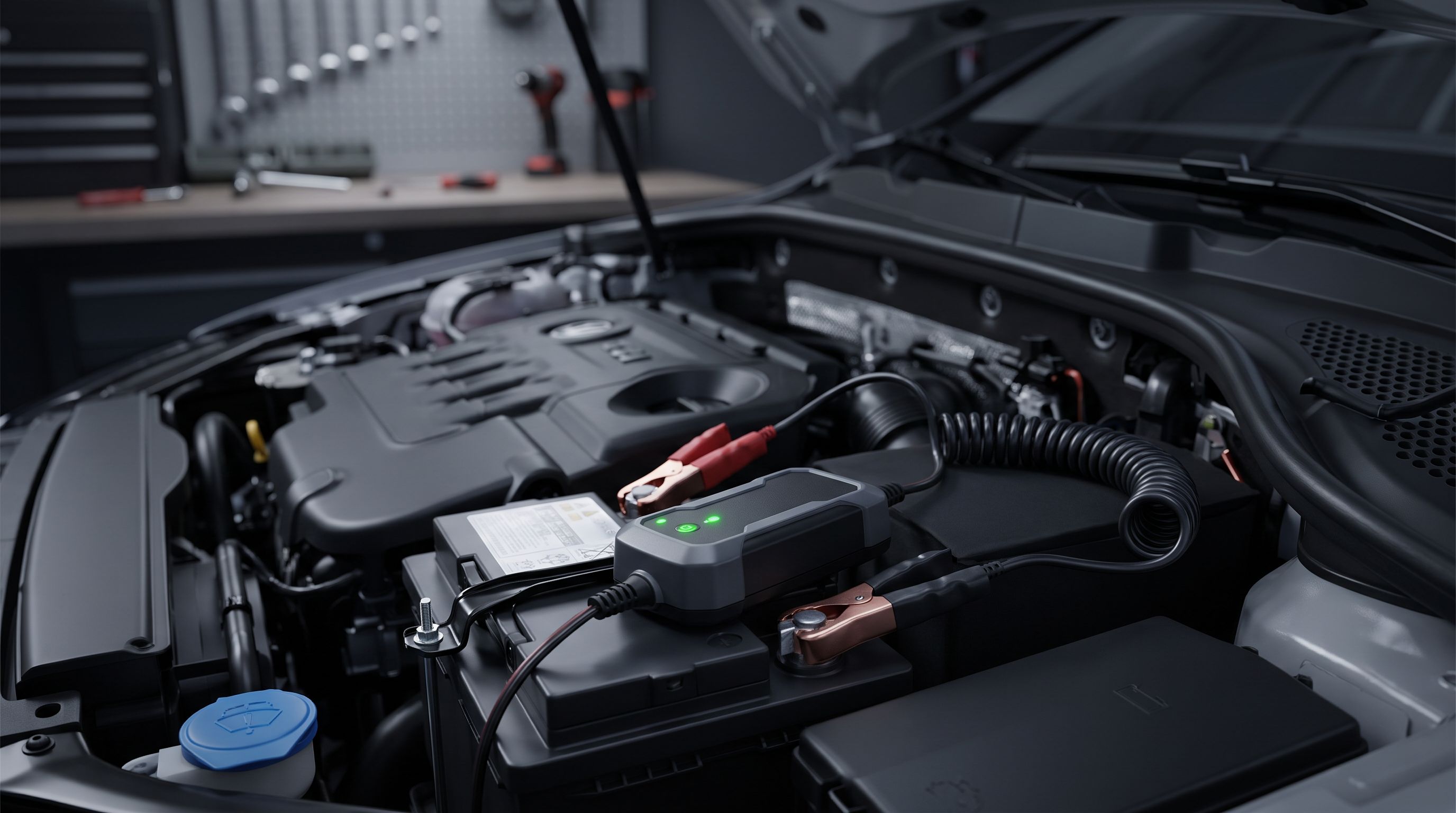
Battery Tender for a Stored Car in 2026: Amps by Ah
How to match a battery tender to your stored car's Ah rating and chemistry in 2026 — amperage math, AGM and lithium modes, and four maintainers worth buying.
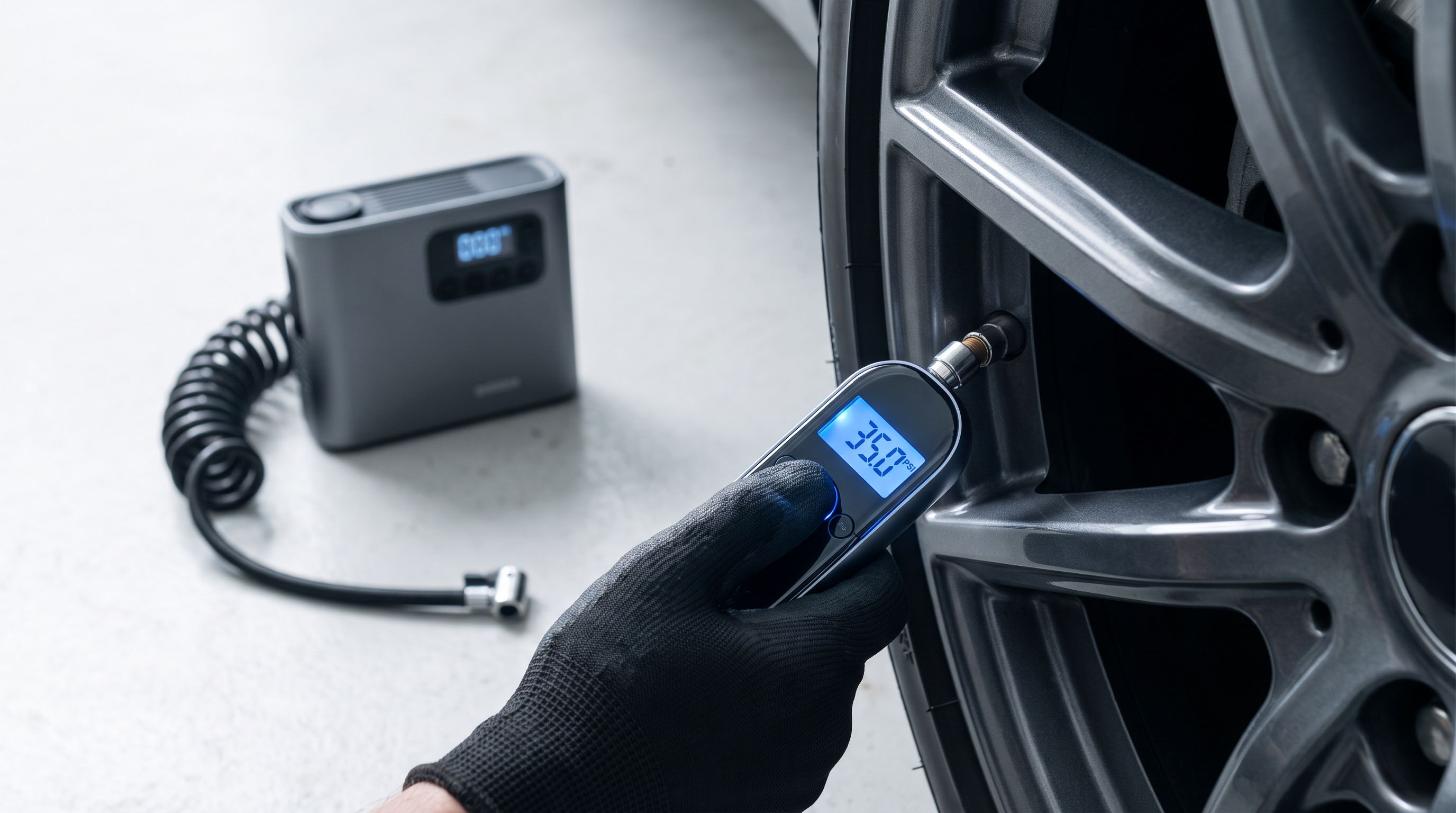
Digital Tire Pressure Gauge 2026: Why Inflator Dials Lie
Built-in inflator gauges drift by several PSI. Here's how digital tire pressure gauges compare in 2026 on stated accuracy, chuck type and alloy-wheel valve access.
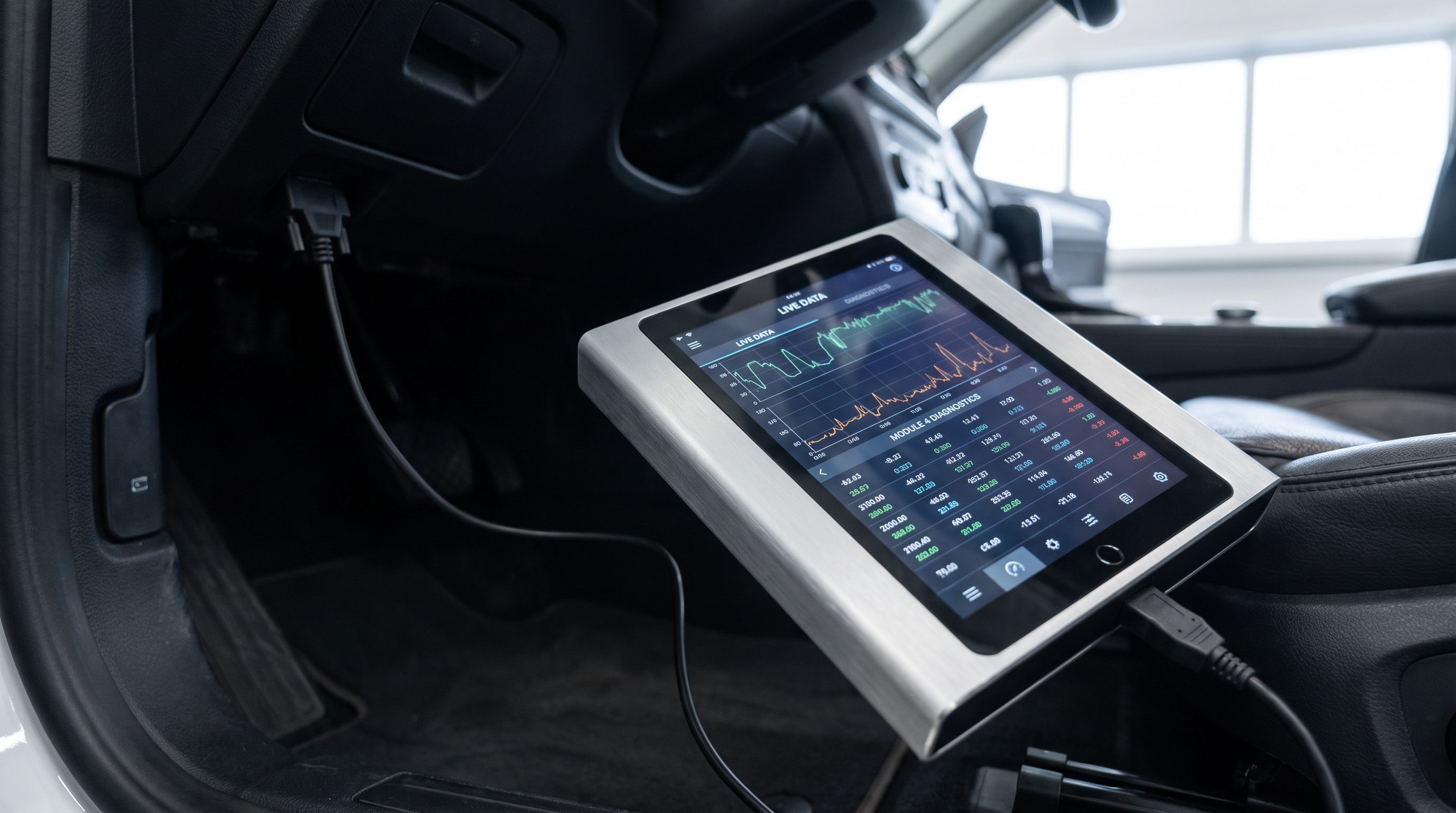
ECU Coding Scan Tool in 2026: Do You Actually Need One?
ECU coding scan tool vs mid-tier bidirectional in 2026: which tier you actually need, what coding really unlocks, and 5 tools ranked by module coverage.