ADAS Calibration Scan Tool 2026: What a Windshield Swap Needs
A windshield swap can blind your lane-keep camera. Here's how ADAS calibration works in 2026 and which scan tools actually run static and dynamic routines by make.
Reader-supported: we may earn a commission from links on this page, at no extra cost to you. It never affects our picks. Learn more.
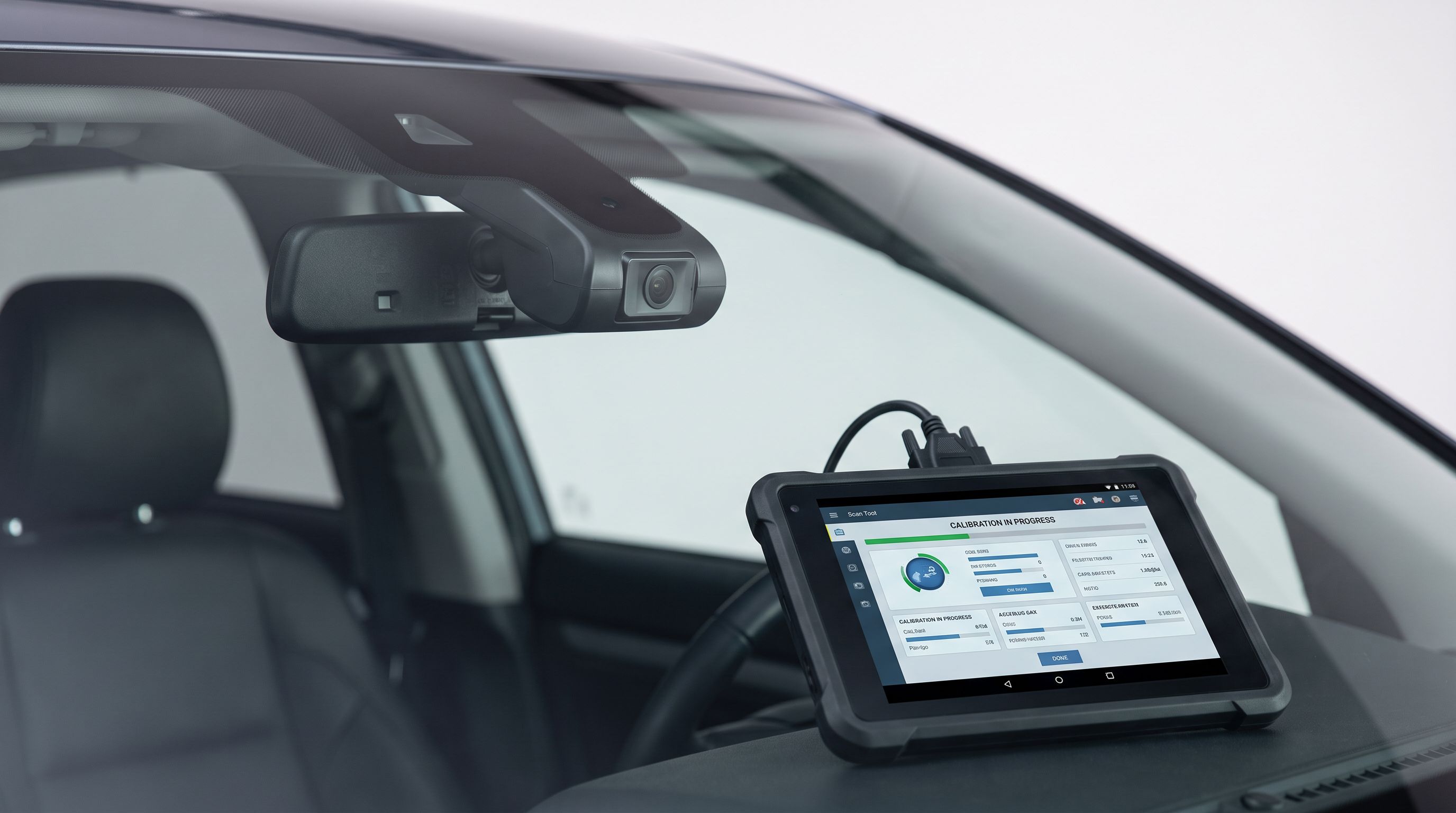
Replace a windshield on almost any car built in the last decade and you've just moved the eyes of the car. The forward-facing camera that runs lane keeping, automatic emergency braking, adaptive cruise and traffic sign recognition is bonded to or bracketed on that glass. Shift it a couple of millimetres — or change the optical properties of the glass in front of it — and the camera's idea of "straight ahead" no longer matches the car's.
That's why ADAS calibration exists, and why a $40 code reader is the wrong tool for the job. Below is a plain-English explainer of static versus dynamic calibration, what actually has to happen after a glass swap, and which bidirectional scan tools genuinely support those routines by make in 2026.
The short version
- Best overall: Autel MaxiSYS MS909
- Best value for serious DIY: Autel MaxiSYS MS906 Pro
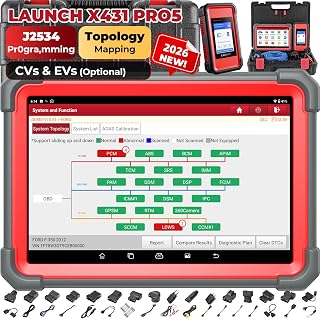
- Best for dynamic calibrations and coverage: Launch X431 PRO5
- Best cloud-connected option: Topdon Phoenix Max
- Budget pick for pre/post scans: Autel MaxiCOM MK808S-TS
 Budget pick for pre/post scans · Autel MaxiCOM MK808S-TS — Check price on Amazon →
 Best cloud-connected option · Topdon Phoenix Max — Check price on Amazon →
 Best for dynamic calibrations and coverage · Launch X431 PRO5 — Check price on Amazon →
 Best value for serious DIY · Autel MaxiSYS MS906 Pro — Check price on Amazon →
 Best overall · Autel MaxiSYS MS909 — Check price on Amazon →
Why a windshield swap breaks ADAS
The forward camera module looks through a specific optical zone of the glass. Modern windshields have an acoustic interlayer, often a heated wiper park area, sometimes a dedicated camera window with controlled thickness and wedge angle. OEM-spec glass is manufactured so the camera sees a predictable image; cheaper aftermarket glass may have slightly different distortion in that zone.
Then there's the mechanical side. The camera bracket is bonded to the glass at the factory with tight positional tolerance. A replacement bracket, a slightly different bead height of urethane, or a windshield seated a fraction differently in the aperture all change the camera's pitch, yaw and roll relative to the vehicle's thrust line.
The camera doesn't know any of that. It keeps reporting lane positions and object distances using its stored calibration data. A small angular error at the sensor becomes a large positional error 60 metres down the road — which is exactly where automatic emergency braking makes its decisions.
Most manufacturers now explicitly require recalibration after:
- Windshield replacement or camera bracket disturbance
- Camera module replacement
- Front or rear suspension/alignment changes that alter ride height or thrust angle
- Front bumper or grille work on radar-equipped cars
- Battery or module replacement that clears calibration memory on some platforms
Always check the OEM service information for the specific year, make and model. Requirements vary enormously — some Toyotas want a static target board, some Hondas want a drive cycle, some Subarus with EyeSight want both, in a specific order.
Static vs dynamic calibration, explained
Static calibration happens in a controlled space. The vehicle is centred and levelled, the thrust line is measured, and a physical target — a printed pattern board, a radar reflector, a doppler simulator — is positioned at an OEM-specified distance and height in front of (or behind) the car. The scan tool then commands the module into calibration mode and the camera learns the target's known geometry. This needs floor level within tight tolerance, controlled lighting, no reflective clutter, and real space: some targets sit several metres ahead of the bumper.
Dynamic calibration is a road procedure. The scan tool puts the module into learn mode, then you drive at a specified speed range on well-marked roads for a set distance or time while the camera observes lane lines and traffic. Some makes specify no rain, no dusk, a minimum number of visible lane markings.
Many vehicles need both. A common pattern is a static routine to set the baseline angles, then a dynamic drive to confirm and fine-tune. Skipping the second half leaves a "calibration incomplete" state that may not throw a dash light immediately.
This is the key buying insight: a dynamic-only vehicle can genuinely be calibrated with a capable bidirectional scan tool and an open road. A static-required vehicle needs the scan tool plus targets and a frame. Which camp your car falls into determines how much you need to spend.
How to choose
Match coverage to your actual vehicles, not the spec sheet
Every manufacturer's marketing claims "ADAS coverage". What matters is whether your specific year, make and model appears in the tool's calibration list, and whether it lists the routine you need. Before buying, use the brand's online coverage lookup and search your VIN-level platform. A tool that calibrates 2019 Toyotas beautifully may have nothing for a 2023 Hyundai. Reddit threads and shop forums are useful here — owners post when a routine fails on a specific platform.
Bidirectional control and coding are non-negotiable
A code reader reads. A bidirectional tool commands: it can start calibration mode, run actuator tests, reset steering angle sensors, and perform module coding after a part swap. If the product description doesn't explicitly say "bidirectional control" and "ECU coding/programming", it cannot initiate an ADAS routine. Related capabilities worth confirming: steering angle sensor reset, yaw rate sensor learn, and ride height/level sensor calibration, all of which feed the same geometry.
Decide whether you need the frame
A calibration frame and target set is a separate, significant purchase — Autel, Launch, Bosch, Hunter and Hella Gutmann all sell systems, and the scan tool talks to the vehicle while the frame positions the targets. If you only service vehicles with dynamic procedures, you can skip it. If you want to do static work at home, budget for the frame, verify you have a level bay with enough clear floor, and understand that an out-of-level floor quietly invalidates the whole procedure.
Check the update and subscription model
ADAS coverage ages fast. Most tools ship with a year of updates, after which you pay annually. Confirm what happens when the subscription lapses — most tools keep functioning on the last installed software but stop gaining new models. A cheaper tool with an expensive renewal can cost more over three years than a flagship.
Documentation matters more than you think
Pre-scan and post-scan reports are the paper trail that proves the car left with no stored faults and a completed calibration. If you're doing this for anyone other than yourself, printable or exportable reports with VIN, timestamp and fault list are essential.
Comparison table
| Tool | Bidirectional control | ADAS calibration role | Coding/programming | Best suited to |
|---|---|---|---|---|
| Autel MaxiSYS MS909 | Yes, full | Runs static + dynamic routines; pairs with Autel calibration frames | Yes, incl. advanced | Pro shops and heavy DIY doing static work |
| Autel MaxiSYS MS906 Pro | Yes, full | Initiates supported calibration routines; pre/post scans | Yes | Advanced DIY wanting most of the capability |
| Launch X431 PRO5 | Yes, full | Works with Launch ADAS frames; strong dynamic support | Yes, online coding | Multi-brand garages, mixed import fleets |
| Topdon Phoenix Max | Yes, full | Supported calibration initiation; topology mapping | Yes, remote programming | Newer vehicles, cloud-assisted workflows |
| Autel MaxiCOM MK808S-TS | Limited/service functions | Pre- and post-scan documentation only | No full coding | Verifying faults before and after glass work |
Coverage varies by region, software version and vehicle. Always confirm against the manufacturer's live coverage lookup for your exact vehicle before buying.
Autel MaxiSYS MS909 — best overall
Prices last checked October 15, 2026. Amazon prices change frequently, so treat these as a guide and check the live price before you buy.
Autel MaxiSYS MS909
Flagship-tier bidirectional diagnostics with the broadest ADAS calibration coverage and optional frame support.
The MS909 sits in Autel's upper diagnostic tier and is the tool most commonly paired with Autel's ADAS calibration frames and target sets. You get full bidirectional control, extensive ECU coding, topology mapping on supported platforms, and the deepest OE-level routine list of anything here. If you intend to do static calibrations properly — windshield cameras, front radar, blind spot modules — this is the sensible base.
What it gives up: cost, and the fact that the tablet alone doesn't calibrate anything. You still need targets, a frame and a level bay. Annual software renewal is a real ongoing expense, and the learning curve is steeper than a consumer scanner.
Autel MaxiSYS MS906 Pro — best value for serious DIY
Autel MaxiSYS MS906 Pro
Full bidirectional control, ECU coding and ADAS pre/post-scan support without flagship pricing.
The MS906 Pro delivers the parts most home mechanics actually use: full bidirectional control, broad system coverage, active tests, service resets, and ECU coding on supported makes. For dynamic calibration procedures — put the camera in learn mode, drive the specified cycle — it's often all the electronics you need, alongside solid pre- and post-scan reports.
It gives up some of the flagship's advanced programming depth, processing speed and frame integration. If your plan includes static target work later, check carefully that your intended frame system supports this tier before committing, because the gap between "runs the routine" and "integrates with the frame" is where people get caught out.
Launch X431 PRO5 — best for dynamic calibrations and coverage
Launch X431 PRO5
Strong multi-brand coverage, online coding and compatibility with Launch's ADAS calibration frames.
Launch has built a reputation on wide multi-brand coverage, particularly across European and Asian platforms, and the X431 PRO5 carries full bidirectional control plus online coding on supported makes. Launch also sells its own ADAS calibration hardware, so there's a clear upgrade path if you start with dynamic work and later want targets.
The trade-off is interface polish and occasional inconsistency between software versions — community feedback suggests coverage for a given model can improve or regress across updates. Verify your specific platform before buying, and factor the renewal cost into a three-year view rather than judging on the sticker alone.
Topdon Phoenix Max — best cloud-connected option
Topdon Phoenix Max
Fast topology mapping, bidirectional tests and remote programming support for newer camera-equipped vehicles.
Topdon's higher-end tablets lean on cloud-connected workflows: fast topology mapping, remote programming assistance on supported vehicles, and quick full-system scans. For newer camera-equipped cars where module relationships matter, seeing the network map before you start saves guesswork, and bidirectional actuator tests are there when you need to command a module.
It's the least established of the big three for deep ADAS routines, so coverage checking is especially important. It also leans on connectivity — a weak signal in a back-corner bay is a genuine workflow annoyance. Strong choice if your vehicles are recent and your shop has decent Wi-Fi.
Autel MaxiCOM MK808S-TS — budget pick for pre/post scans
Autel MaxiCOM MK808S-TS
Affordable way to document fault codes before and after glass work, but it won't run the calibration itself.
Be clear about what this is: a well-regarded service-function tablet with TPMS capability and bidirectional tests on supported systems, not a calibration platform. Where it earns its place is documentation. Scan the car before the glass comes out, scan it again after, and you have a record of exactly which ADAS faults appeared and whether the calibration performed elsewhere actually cleared them.
It gives up full ECU coding and the ability to initiate most ADAS calibration routines. If a shop did your windshield and says "calibration complete", this is a cheap way to verify the claim rather than take it on faith.
A realistic workflow after a glass swap
- Pre-scan before any work and save the report.
- Confirm the OEM requirement for your exact year, make and model — static, dynamic, or both, and in what order.
- Fix the fundamentals first. Correct tyre pressures, no cargo load, full fuel per some OEM specs, and a known-good wheel alignment. Calibrating to a bad thrust angle bakes in the error.
- Run the routine with a bidirectional tool, following the on-screen prompts exactly — speed windows and distances are not suggestions.
- Post-scan and road-verify. Clear faults, confirm the calibration status reads complete, then validate lane keeping and adaptive cruise behaviour on a familiar, well-marked road in good conditions.
If anything about step 3 or 4 isn't achievable — no level floor, no space for targets, no clear coverage for your vehicle — that's the signal to hand it to a shop with a frame. There's no partial credit on a system that decides when to brake for you.
FAQ
Does every windshield replacement need ADAS calibration? No — only vehicles with a glass-mounted forward camera or related sensors. But that's most cars built in the last decade with lane keeping or automatic emergency braking. Check the OEM service information for your specific year, make and model rather than assuming.
Can I do a dynamic calibration myself? On some vehicles, yes, if you have a genuinely bidirectional scan tool with coverage for your platform and can meet the drive-cycle conditions. Static procedures are much harder at home because they need a level floor, precise target placement and controlled lighting.
Will a cheap OBD-II code reader work? No. Code readers read and clear faults. Calibration requires commanding the module into a learn mode, which needs bidirectional control. A reader like the MaxiCOM MK808S-TS is useful for documenting before/after fault codes, not for performing the routine.
Does the dash light always come on if calibration is skipped? Not reliably. Some platforms store an incomplete calibration state without an immediate warning lamp, and the system may behave subtly worse rather than failing outright. That's why post-scan verification matters more than the instrument cluster.
Do aftermarket windshields cause calibration failures? They can. Glass quality in the camera's optical zone, bracket position and interlayer differences all affect the result. If a calibration repeatedly fails and the procedure was followed correctly, the glass itself is a legitimate suspect.
How often do I need to pay for software updates? Most of these tools include a year, then charge annually. Lapsed subscriptions usually leave the tool working on its last software version but without new vehicle coverage — which matters a lot in ADAS, where new platforms appear constantly.
Get the best car care deals in your inbox
Join the GarageProof newsletter for hand-picked car care deals and new buying guides. No spam, unsubscribe anytime.
Related reads
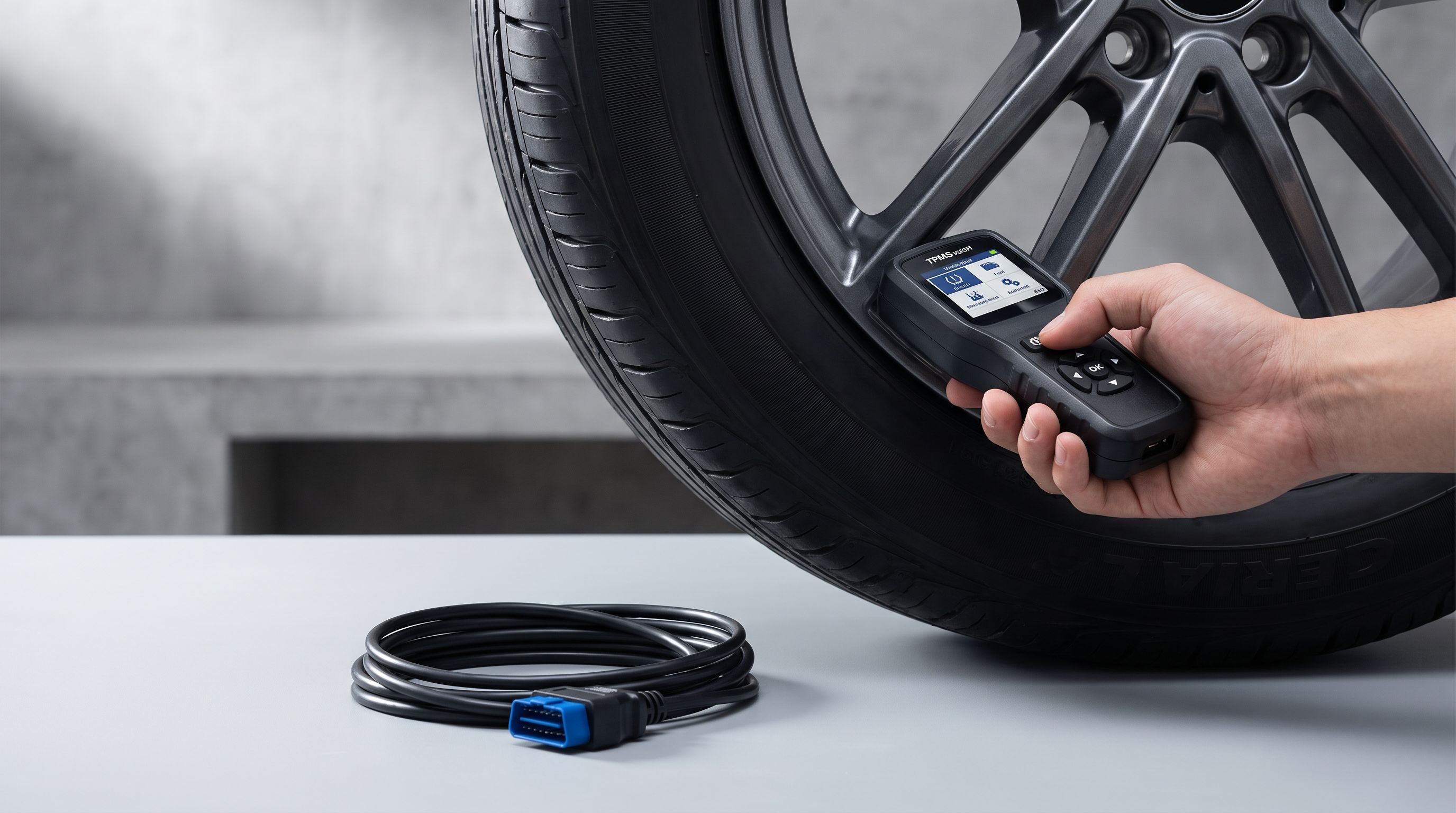
TPMS Relearn Tools in 2026: Check Coverage Before You Buy
A 2026 buying guide to TPMS relearn and programming tools, focused on vehicle coverage lists, sensor cloning and OBD relearns — verify your make before you buy.
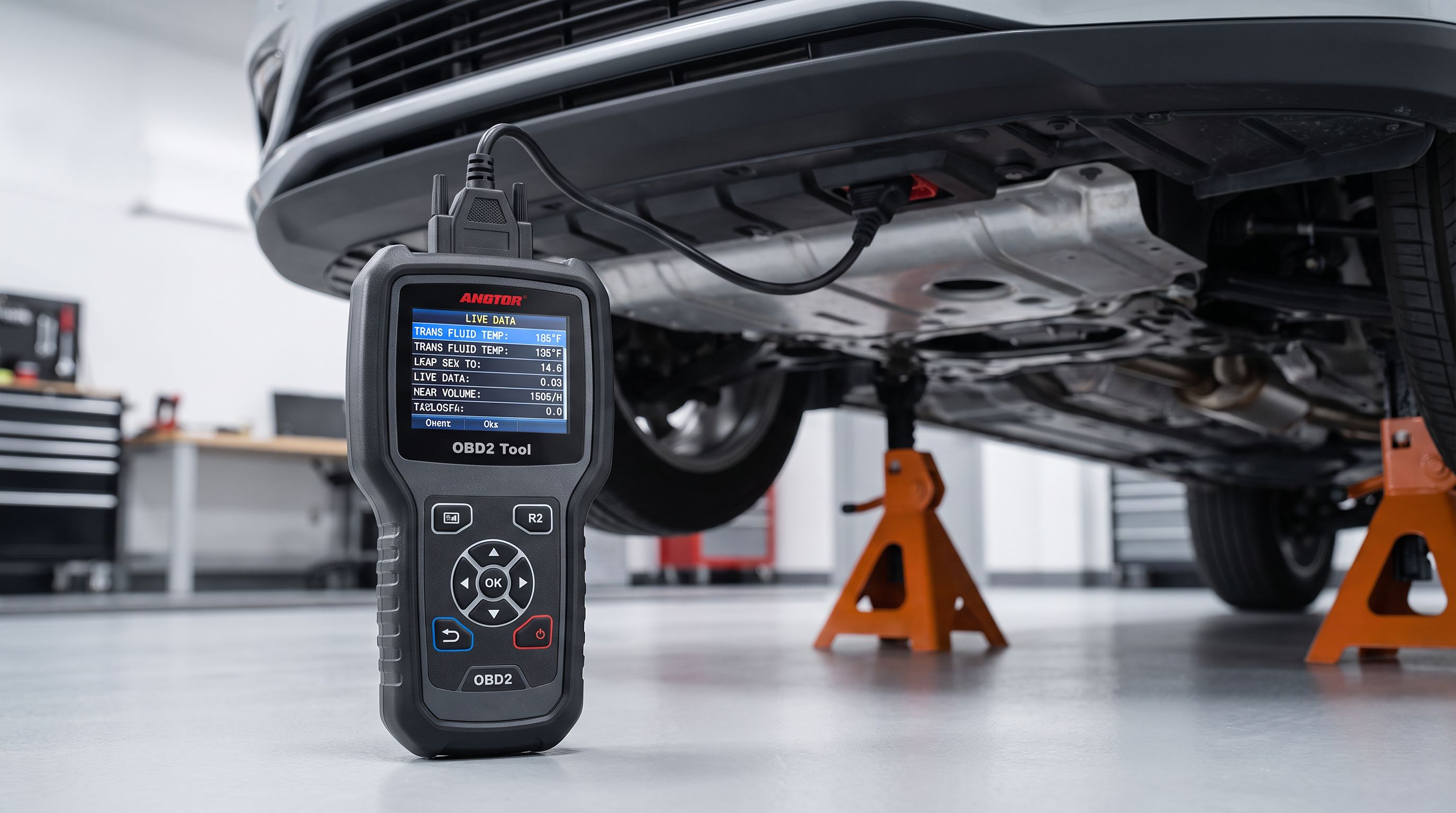
Scan Tools That Read Transmission Fluid Temp in 2026
Most modern automatics have no dipstick. We compare scan tools by whether they read live transmission fluid temperature PIDs for your make in 2026.
Prime Big Deal Days OBD2 Scanners: Which Tier Is Worth It
Prime Big Deal Days runs October 6–7, 2026. Here's how to judge prime day OBD2 scanner deals by capability tier — code reader, live data, or bidirectional.