3 Channel Dash Cam 2026: Will the Cabin Cam Actually Fit?
A 2026 guide to 3 channel dash cams focused on rear cable length, interior IR quality and hardwire kit fitment — so the cameras physically fit your cabin and glass.
Reader-supported: we may earn a commission from links on this page, at no extra cost to you. It never affects our picks. Learn more.
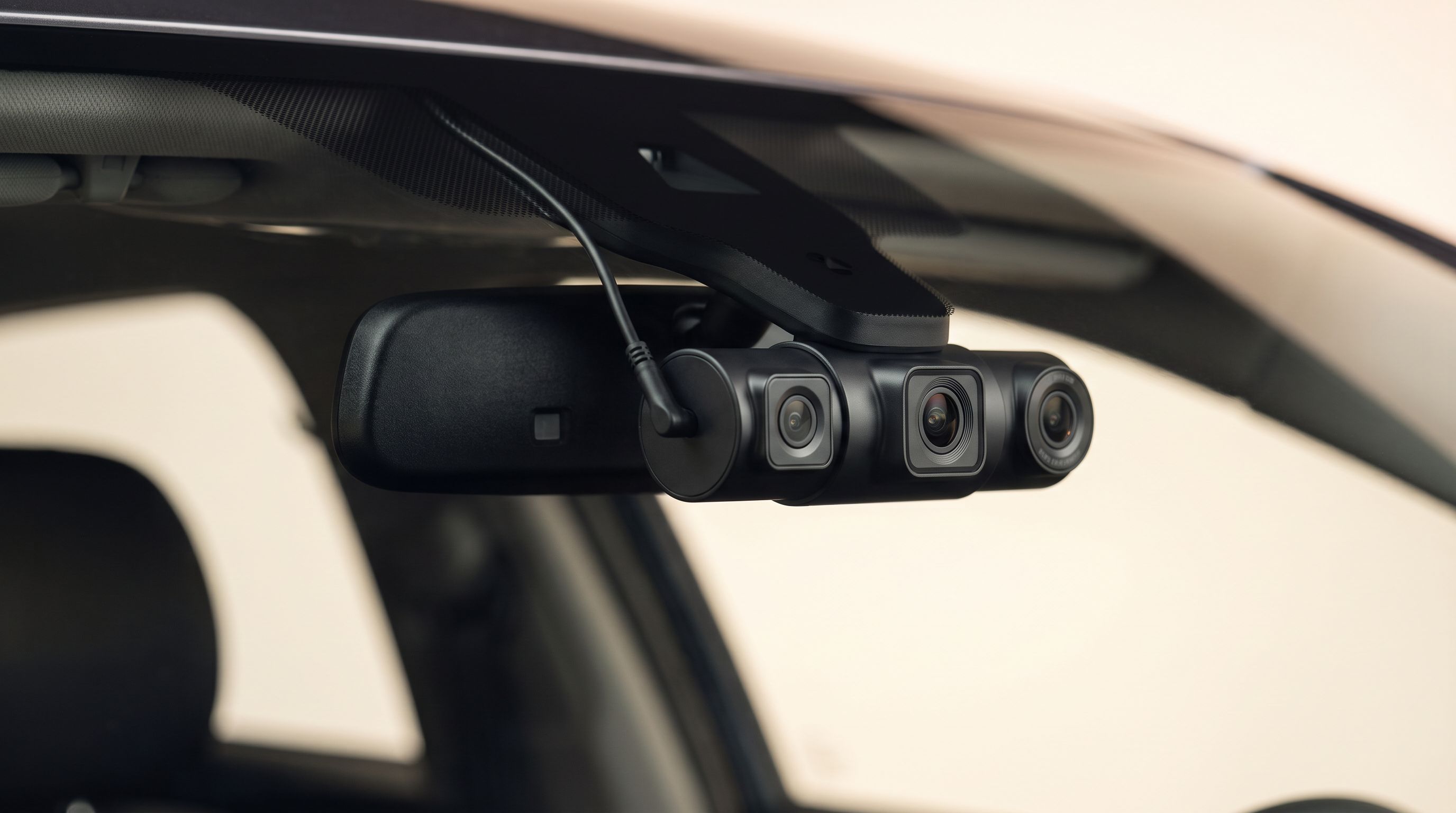
Three-channel dash cams solve a real problem: a front camera tells you what you hit, a rear camera tells you who hit you, and an interior camera tells you what happened in the cabin. The trouble is that a 3 channel dash cam is not one device — it's a front unit plus two satellite cameras plus somewhere between 15 and 30 feet of cable that has to disappear into your trim without pulling loose airbag covers or blocking a sensor.
That's the part most buying guides skip. This one focuses on it: rear cable length versus your vehicle's actual run, interior IR quality (and where the IR LEDs sit relative to the windshield), and hardwire kit compatibility for parking mode. We compared current models on published specs, independent reviews and verified owner feedback rather than physically installing them, so treat the fitment notes as a checklist to verify against your own car before you buy.
The short version
- Best overall: Viofo A229 Pro 3CH
- Best for rideshare interiors: Vantrue N4 Pro
- Best video quality: Viofo A329S
- Best 4K front-and-rear value: 70mai Dash Cam T800
- Premium pick: BlackVue DR970X-3CH
 Premium pick · BlackVue DR970X-3CH — Check price on Amazon →
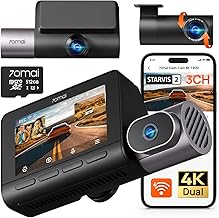 Best 4K front-and-rear value · 70mai Dash Cam T800 — Check price on Amazon →
 Best video quality · Viofo A329S — Check price on Amazon →
 Best for rideshare interiors · Vantrue N4 Pro — Check price on Amazon →
 Best overall · Viofo A229 Pro 3CH — Check price on Amazon →
Why fitment is the hard part of a 3-channel install
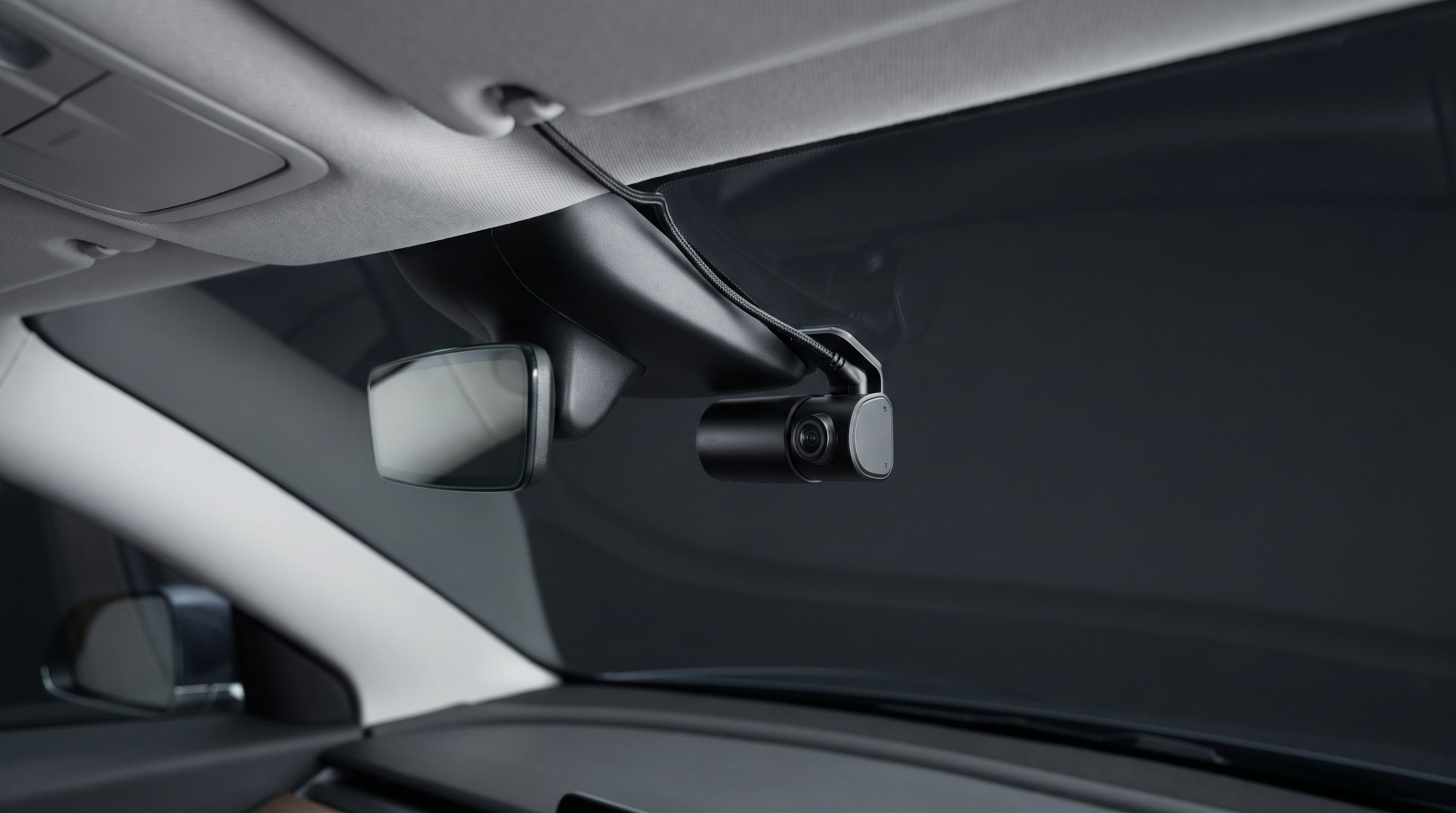
A single-channel cam is a 12-foot power run down the A-pillar to the fuse box or 12V socket. Adding a rear camera roughly triples the work — you're now running a thin coax or proprietary cable along the headliner, down the C-pillar or through the tailgate boot, to a camera stuck on the rear glass. Adding an interior camera adds a third connection, usually a short jumper from the front unit to a module that either clips to the main body or mounts separately near the mirror.
Three practical constraints decide whether this goes smoothly:
Cable length. Most bundled rear cables land in the 18–20 ft range, which is comfortable in a sedan or hatchback and tight in a full-size SUV, minivan, crew-cab pickup or anything where you want to route through a tailgate's rubber grommet. Measure your intended route with a piece of string before ordering — headliner to C-pillar to tailgate, not a straight line. Most brands sell extension cables; confirm the connector type (many Viofo and Vantrue models use a fine coax-style plug, BlackVue uses its own) before assuming a generic cable will work.
Windshield real estate. Modern cars put a rain sensor, lane-keep camera, humidity sensor and sometimes a heated wiper park zone right behind the mirror. Wedge-shaped bodies like the BlackVue DR970X-3CH tuck flush against the glass; taller, screen-equipped bodies like the Vantrue N4 Pro need more clearance and may end up lower in the driver's view. If your car has an ADAS camera housing, check how wide it is — some 3-channel units with an attached interior module are physically wider than the gap on either side of that housing.
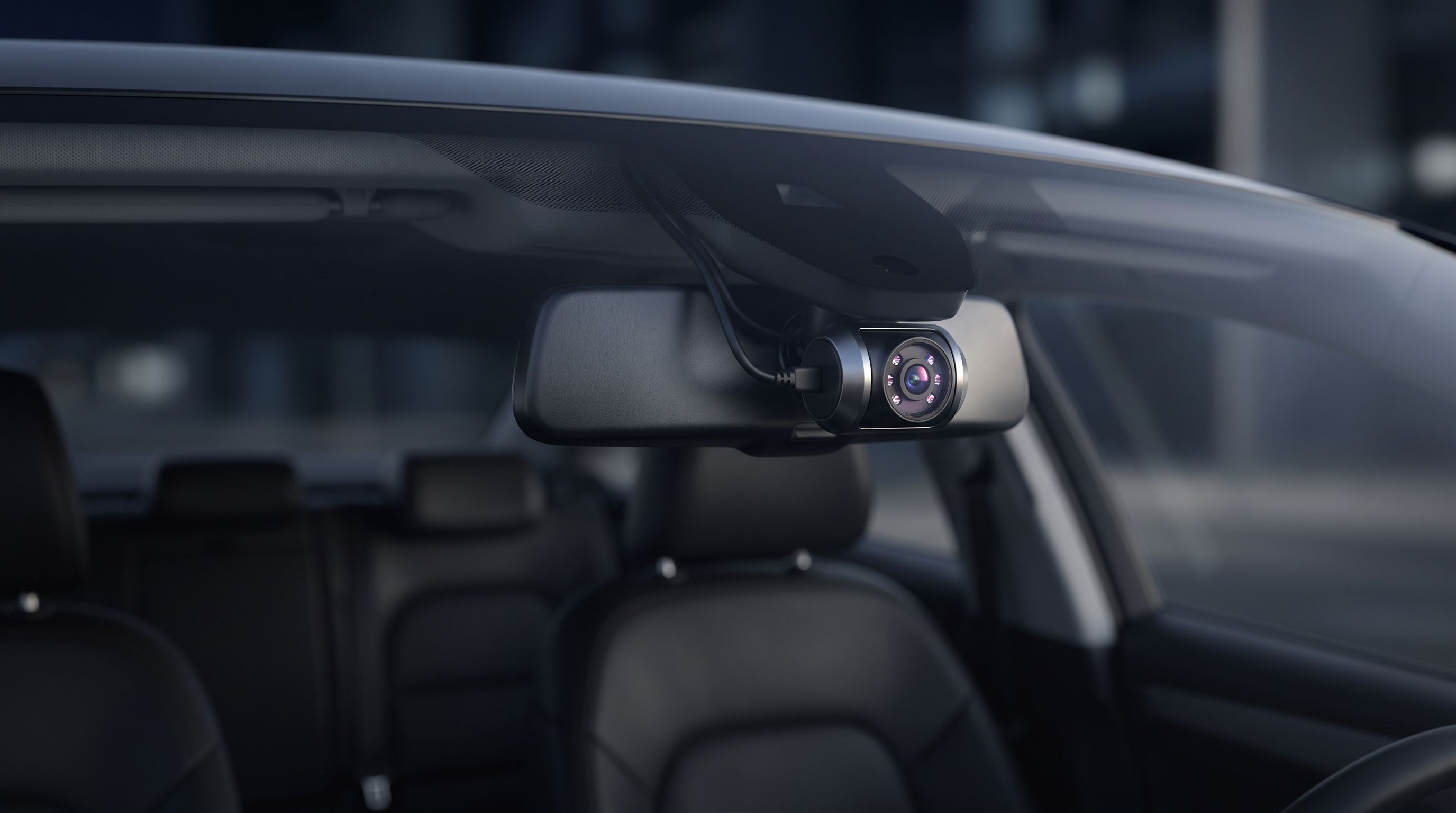
Interior camera geometry. An interior camera that sits at the windshield shoots through the gap between the front seats. That's fine for a taxi or rideshare, less useful if you mainly want to see the rear bench. Cams with a detachable or separately mounted cabin module give you more freedom to aim it. IR LEDs behind glass can also reflect back into the lens — units that place the IR emitters on a rearward-facing module, away from the windshield, generally produce cleaner night footage.
Interior IR quality: what actually matters
Infrared cabin cameras are near-universally 1080p or lower, and resolution is rarely the limiting factor. What separates a usable cabin recording from a smeared grey blur:
- Number and placement of IR LEDs. Four emitters spread across the module light a cabin more evenly than two clustered in the centre, which tends to blow out the front-seat headrests and leave the back row dark.
- An IR-cut filter that actually switches. Cheaper cabin cams run in permanent IR mode, so daytime footage looks washed out and monochrome. Better ones switch between day colour and night IR.
- Field of view versus distortion. A very wide cabin lens captures both rows but stretches faces at the edges — exactly where you need identifiable detail for an insurance or platform dispute.
- Window tint and glare. IR light bounces off side glass. Reviewers consistently report better results when the cabin module is angled slightly downward rather than dead level.
Vantrue built its reputation on this specific use case, and the N4 Pro remains the reference point for rideshare drivers. Viofo's cabin camera on the A229 Pro 3CH is close behind and, because the rest of the system is stronger, it's the better all-round buy for most people.
Hardwire kits and parking mode
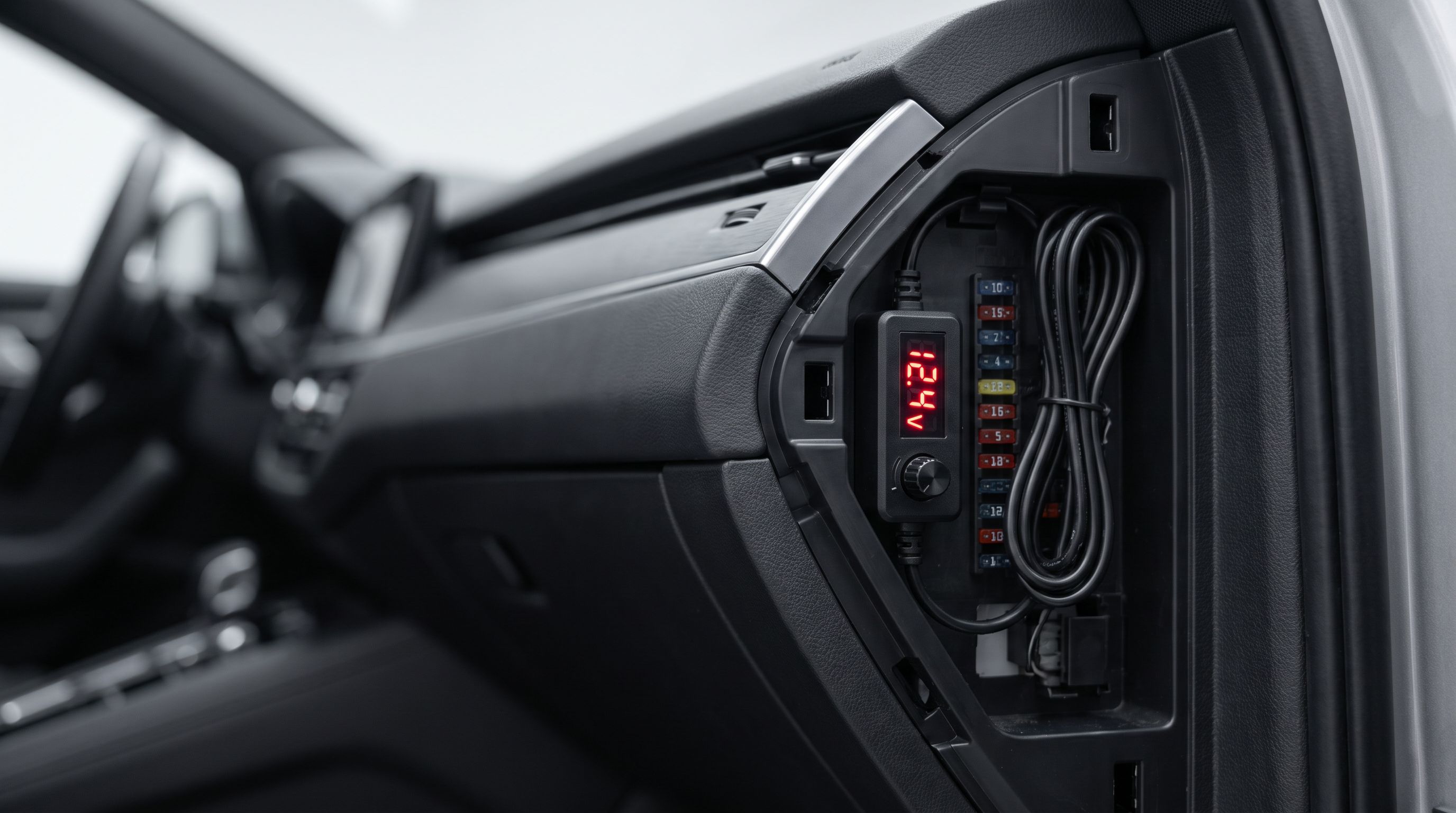
Parking mode is the main reason to hardwire rather than use the cigarette socket. Every brand here sells its own kit, and they are not interchangeable — the plug on a Viofo HK4 will not fit a BlackVue, and vice versa. A few things to verify:
- Voltage cutoff. A good kit lets you set the shutdown threshold (typically 11.8V–12.2V for lead-acid). Set it too low on a car with a weak battery and you'll be calling for a jump.
- Fuse tap type. Modern cars use mini, micro2, low-profile mini or ATO blade fuses. Buy the tap that matches your box; many kits ship with one style only.
- Circuits. You need one constant-hot fuse and one ignition-switched fuse, plus a chassis ground. Use a circuit tester, not guesswork — tapping an airbag or ABS circuit is a bad idea.
- Newer vehicles and CAN-bus battery management. Some 2020-and-later vehicles with intelligent battery sensors don't love a permanent parasitic draw. A dedicated battery pack (Viofo, BlackVue and Vantrue all sell or support them) sidesteps that entirely and is worth considering if you park outdoors overnight.
If you'd rather not touch fuses, most of these cams still record in parking mode from a socket adapter while the ignition is on — you just lose 24/7 coverage.
Comparison
| Model | Third channel | Typical rear cable | Hardwire approach | Best suited to |
|---|---|---|---|---|
| Viofo A229 Pro 3CH | Integrated IR cabin cam | ~20 ft bundled, extensions sold | Viofo HK4 ACC hardwire kit or HK3, plus optional battery pack | Most drivers wanting all-round coverage |
| Vantrue N4 Pro | IR cabin cam with multiple LEDs | Long bundled rear cable, extensions available | Vantrue-branded hardwire kit with voltage cutoff | Uber/Lyft, taxi, family cars |
| Viofo A329S | Configurable rear or interior second/third camera | ~20 ft bundled | Viofo HK4 ACC | Video quality and Wi-Fi offload |
| 70mai T800 | 4K front + 4K rear focus, third channel available | Bundled rear cable | 70mai hardwire kit | Plate capture at both ends |
| BlackVue DR970X-3CH | Slim interior module | BlackVue proprietary coax | BlackVue Power Magic / B-130X battery | Tight windshields, cloud features |
Cable lengths and kit part numbers change between production runs — confirm what's in the box on the current listing before you order extensions.
Viofo A229 Pro 3CH — best overall
Prices last checked September 26, 2026. Amazon prices change frequently, so treat these as a guide and check the live price before you buy.
Viofo A229 Pro 3CH
Three Sony STARVIS 2 sensors, a genuinely usable IR cabin cam and the most mature hardwire ecosystem.
The A229 Pro in its three-channel form is the default recommendation for good reason: three STARVIS 2 sensors, strong low-light front footage, a rear camera that reads plates at realistic following distances, and a cabin camera that's genuinely usable at night rather than a checkbox. Viofo's accessory ecosystem is the deciding factor here — the HK4 ACC hardwire kit, extension cables and battery packs are all readily available, which matters when your SUV needs three extra feet of rear cable. What it gives up: the body is chunkier than BlackVue's wedge, the app is functional rather than polished, and there's no built-in LTE, so cloud alerts aren't part of the package.
Vantrue N4 Pro — best for rideshare interiors
Vantrue N4 Pro
IR cabin camera built for night passenger capture, with a long rear cable and simple 24/7 parking wiring.
If the interior channel is the reason you're buying, start here. Vantrue designs around the rideshare use case, and the N4 Pro's IR cabin camera is tuned to light two rows of passengers rather than just the front seats — the thing that separates an identifiable face from a grey shape in a dispute. The bundled rear cable is generous, which helps in minivans and three-row SUVs that eat cable length. Compromises: the body is taller than the slimmest competition, so it takes more windshield space beneath the mirror, and front video, while good, isn't the sharpest in this list. The screen is handy for aiming the cabin camera during install.
Viofo A329S — best video quality
Viofo A329S
4K front with flexible second/third camera options and fast, stable Wi-Fi offload for evidence.
The A329S is the newer, sharper option in Viofo's lineup and the pick if evidence quality is the priority. 4K front recording with flexible second and third camera choices means you can spec it as front/rear/interior or front/rear/telephoto depending on what you actually need — useful if your main worry is plate capture rather than passengers. Wi-Fi offload is quick, which matters more than people expect: getting a clip onto your phone at the roadside before you move the car is often the difference between a clean claim and a he-said-she-said. Downsides: it's a pricier platform, and the configurability means you need to read the listing carefully to get the exact camera combination you want.
70mai T800 — best 4K front-and-rear value
70mai Dash Cam T800
4K front plus 4K rear in a three-channel package if plate detail at both ends matters more than IR.
The T800 takes a different position: 4K at the front and 4K at the rear, in a three-channel setup. For anyone whose main concern is rear-end collisions and plate detail from cars behind, that rear resolution is a meaningful upgrade over the 1080p or 2K rear cameras most three-channel kits ship with. It's a strong value proposition and the app is clean. Where it gives ground is the cabin channel — 70mai's IR interior performance isn't the equal of Vantrue's, so it's a weaker choice if you drive passengers for a living. Check hardwire kit availability for your region before committing to parking mode.
BlackVue DR970X-3CH — premium pick
BlackVue DR970X-3CH
Slim mirror-hugging bodies, cloud connectivity and the cleanest install in tight windshield spaces.
BlackVue's appeal is install quality and connectivity. The bodies are low, cylindrical and hug the glass, which makes them the easiest choice on windshields already crowded by a big ADAS housing — there's simply less to work around. Cloud features (remote live view, event notification, geofencing) are the most developed in the category, and the Power Magic hardwire kit and B-130X battery pack are proven parking-mode hardware. The trade-offs are cost, a proprietary coax cable that limits your extension options to BlackVue's own parts, and an interior camera that's competent rather than class-leading. Buy it for the clean install and the cloud, not for IR supremacy.
How to choose
Measure the rear run before you buy
String, not eyeballs. Route it the way the cable will actually go: down the A-pillar (or across the headliner), along the roof edge, down the rear pillar, through the tailgate grommet if applicable, to the glass. Add 18 inches of slack. If that number exceeds the bundled cable, budget for a brand-matched extension — and confirm the connector, because these are rarely universal.
Check what's already on your windshield
Photograph the area behind your mirror. Note the width of the ADAS/rain-sensor housing and the gap on each side. Slim wedge bodies (BlackVue) fit where boxier units with screens won't. Also check your local law on windshield obstruction — some jurisdictions restrict how far a device can intrude into the swept area.
Decide what the third channel is for
Passengers, or plates? If it's passengers, prioritise IR LED count, an IR-cut filter and cabin module aim — Vantrue territory. If it's plates and the interior is secondary, a configuration like the A329S or the 70mai T800's 4K rear is the better use of your money.
Match the hardwire kit to your fuse box and battery
Identify your fuse type, confirm the kit includes that tap, and check whether your vehicle has an intelligent battery sensor that may object to a parasitic load. Where there's doubt, a dedicated dash cam battery pack gives you parking mode without touching the starter battery.
Plan your storage
Three channels write three streams. Use a high-endurance microSD card sized for the resolution you've chosen, and format it in-camera on the schedule the manufacturer recommends. A failed card is the single most common reason people discover, after a crash, that they have no footage.
FAQ
Does a 3 channel dash cam drain my battery? Only in parking mode, and only if it's hardwired. A properly configured hardwire kit cuts power at a voltage threshold you set. If you park outside overnight in cold weather or your battery is older, a separate battery pack is the safer route.
Can I install one myself? Most people can. Routing cables into headliner and pillar trim with a plastic trim tool is straightforward on the majority of vehicles. The two places to be careful are curtain airbag areas in the A- and C-pillars — never route a cable across an airbag deployment path — and the fuse box, where you should use a circuit tester to confirm constant versus switched power.
Will the interior camera see the back seats at night? It depends on IR LED placement and how far back the module sits. Front-row coverage is reliable across the board; second-row detail varies a lot, which is why Vantrue's N4 Pro is the specific recommendation for rideshare. Third-row coverage from a windshield-mounted cabin camera is unrealistic in any of these systems.
Do I need 4K on all three channels? No. 4K front is worth it for plate capture ahead. A 2K or 4K rear helps if rear-end incidents are your concern. The interior channel gains little from high resolution — light sensitivity matters far more than pixel count in a dark cabin.
Is a three-channel system legal everywhere? Camera placement rules vary by state and country, and audio recording of passengers is regulated in some jurisdictions — several require notice or consent. If you drive for a platform, check both local law and the platform's own policy, and post a visible notice in the cabin.
Get the best car care deals in your inbox
Join the GarageProof newsletter for hand-picked car care deals and new buying guides. No spam, unsubscribe anytime.
Related reads
Dash Cam for a Leased Car in 2026: No-Drill Power Routes
The best no-drill dash cam setups for leased cars in 2026 — OBD and fuse-tap power, adhesive mounts, and how to route cables around A-pillar airbags safely.
Dash Cam Hardwire Voltage Cutoff 2026: Match It to Your Battery
How to set dash cam hardwire voltage cutoff for AGM, flooded, and stop-start batteries in 2026 — plus four hardwire kits with user-adjustable cutoff points.
Dash Cam for Uber Drivers 2026: 3 Channels or 2?
The best dash cam for Uber drivers in 2026 depends on cabin IR, mounting room, and parking power. We compare 2- vs 3-channel picks from Vantrue, Viofo and more.